Introduction
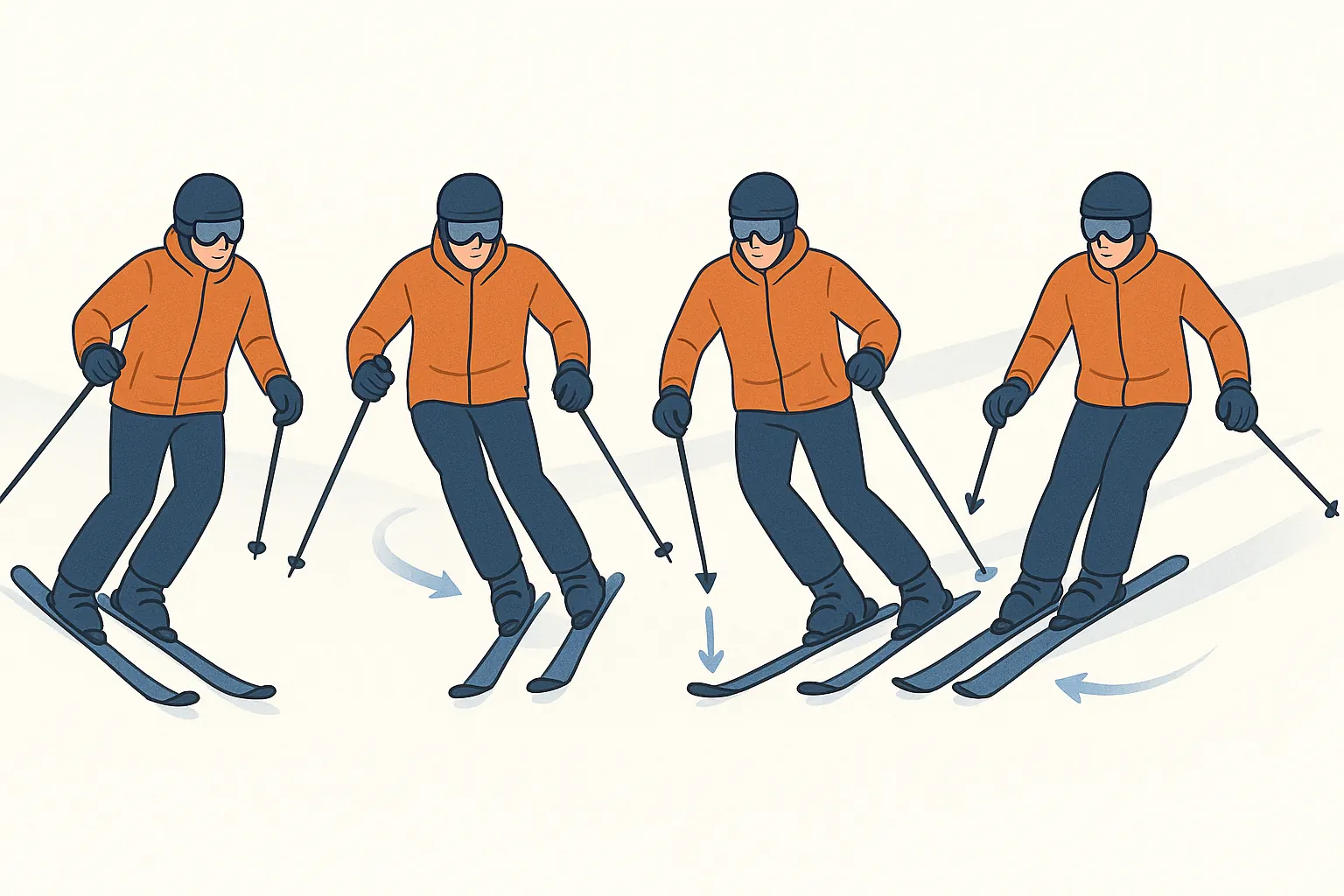
Parallel turns require simultaneous steering of both skis with a timely edge change and progressive pressure to finish balanced over the outside ski.
Steps
-
1) Initiate & change edges
Soft flexion through ankles and knees, move balance to the new outside ski and change edges together. A light pole touch cues timing.
-
2) Guide both skis
Steer both skis with ankles/knees so they remain parallel and follow the same arc.
-
3) Control pressure
Through the fall line, progressively load the outside ski while maintaining edge grip.
-
4) Finish & link
Release, let the skis flatten slightly and prepare the next initiation – keep the left-right rhythm.
Typical Mistakes
- Late edge change – sudden speed spikes.
- Weight on the inside ski – weak outside support.
- Upper-body rotation into the turn – collapsing inward.
- Rigid stance – no release to link the next turn.
FAQ
Are poles required?
Not required, but useful for rhythm and timing of edge changes.
Which slope should I use?
A gentle blue slope with consistent snow – aim for smooth, equal-radius S-turns.
How fast should I ski?
Slow enough to finish the turn and set up the next one without rushing – rhythm beats speed.
Instructor’s Tip
“Think lighten → guide → load → lighten. The outside ski is your anchor; nurture it through the whole arc.”
Conclusion
Mastering parallel turns through edge timing and even steering makes your skiing smooth and reliable, preparing you for carving.