Introduction
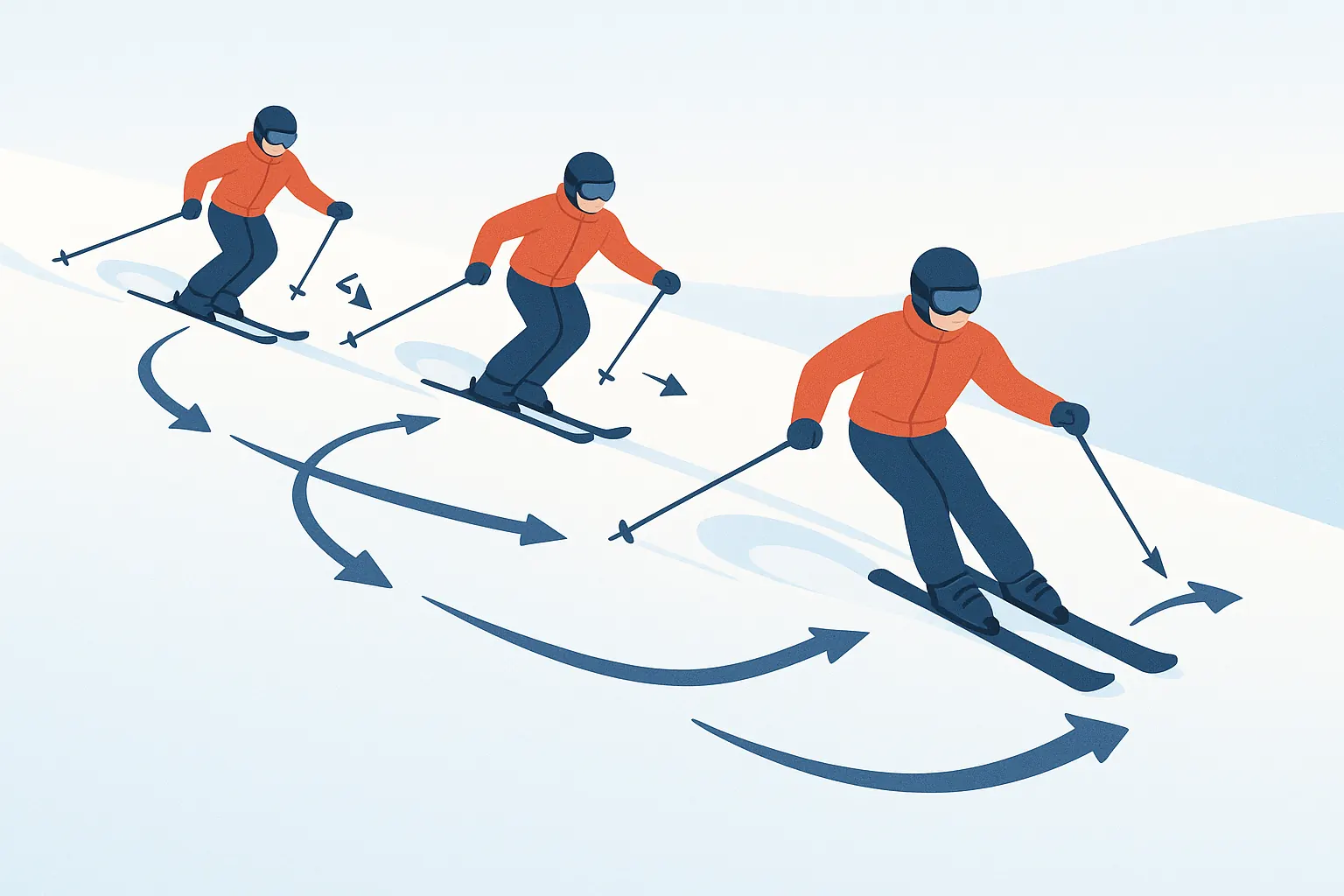
On intermediate terrain, consistent rhythm controls speed. Time releases with a subtle pole touch, shape round finishes, and keep your gaze two turns ahead.
Steps
-
1) Set a metronome with pole touch
A light touch before the release announces the transition. Keep a steady 1–2 cadence without gaps.
-
2) Transition: soften then build
Flex through the edge release, then gradually extend for support—this moves pressure smoothly to the outside ski.
-
3) Use shape to set speed
Too fast? Lengthen the finish across the hill. Too slow? Shorten the finish and slightly increase cadence.
-
4) Vision drives rhythm
Look to the next 2–3 turns. Keep the torso quiet and centered; avoid rotating the shoulders inward.
Typical Mistakes
- Inconsistent cadence—long pause between turns leads to late entries.
- Standing tall in the transition—losing grip and pressure continuity.
- Looking at the tips—shortens turns and accelerates you down the fall line.
- Setting too much edge too soon—no finish across the hill, speed builds.
FAQ
What turn radius should I use?
Match the pitch: on steeper sections go rounder and longer; on mellow terrain, slightly shorter with a touch more cadence.
How do I avoid getting stuck between turns?
Release the edge earlier (with flexion) and let the pole touch cue an immediate entry into the next turn.
Count rhythm or feel it?
Counting (1–2) helps at first, but the goal is an automatic felt rhythm.
Instructor’s Tip
“Rhythm is your cruise control. For less speed add shape; for more speed keep the shape but tighten the cadence.”
Conclusion
On intermediate slopes, stable rhythm and deliberate shaping deliver control and confidence. Keep the cadence, look ahead, and let shape manage speed.