Introduction
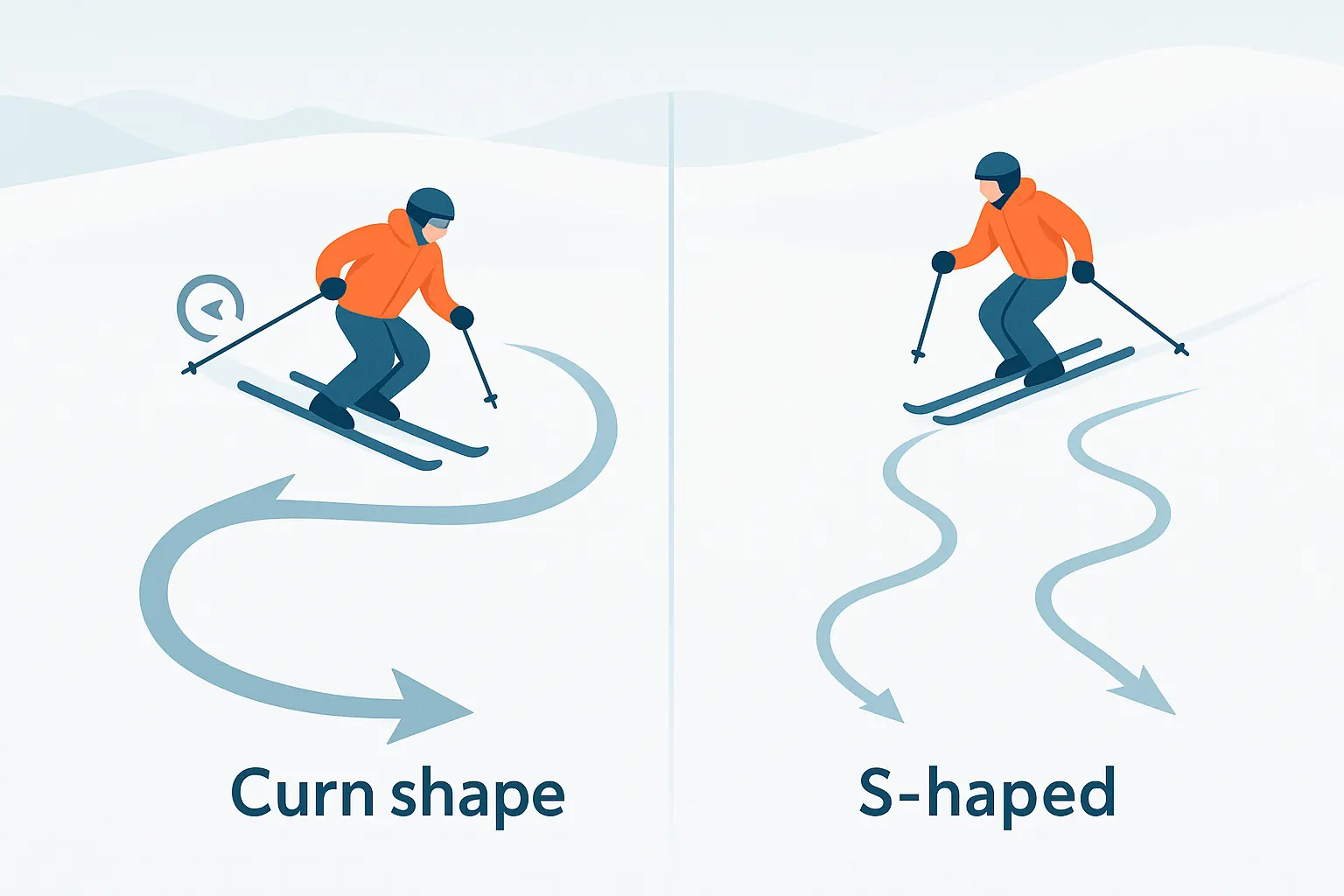
The safest way to manage speed is turn shape: the more you finish across the hill, the more speed you shed. Let shape and line dictate your pace—no harsh skidding.
Steps
-
1) Lengthen the finish (C-shape)
After the fall line, keep rounding until skis point across the hill. This dissipates energy and reduces speed naturally.
-
2) Choose a high line before the fall line
Initiate earlier and higher so speed is managed before the fastest section—no last-second braking in the bottom half.
-
3) Maintain soft pressure and flex
Rhythm: flex through the release, gentle extend for support in the shaping phase. Keep pressure on the outside ski.
-
4) Use a pole touch for timing
A subtle pole touch times the release and entry into the next turn. Adjust length and roundness to slope and snow.
Typical Mistakes
- Setting too much edge too soon—shooting down the hill instead of finishing the turn.
- Standing up through the transition—losing grip and pressure continuity.
- Gazing straight down the hill—cuts turns short and builds speed.
- Reacting late—trying to brake in the bottom half of the arc.
FAQ
Which slope is best?
Blue with even snow. On steeper pitches, first exaggerate round finishes, then reduce them gradually.
How do I slow down without skidding?
Use a longer C-shaped finish and keep the torso quiet. Edge angle grows progressively; outside-ski pressure stays consistent.
Is a long traverse good?
A short traverse as a result of a rounded turn is fine; long traverses break rhythm and cause late entries.
Instructor’s Tip
“If you want less speed, add shape, not muscle. Round the finish and let terrain slow you naturally.”
Conclusion
Using turn shape to manage speed is effective and stable across terrain. Develop rhythm and arc length—speed will follow.