Introduction
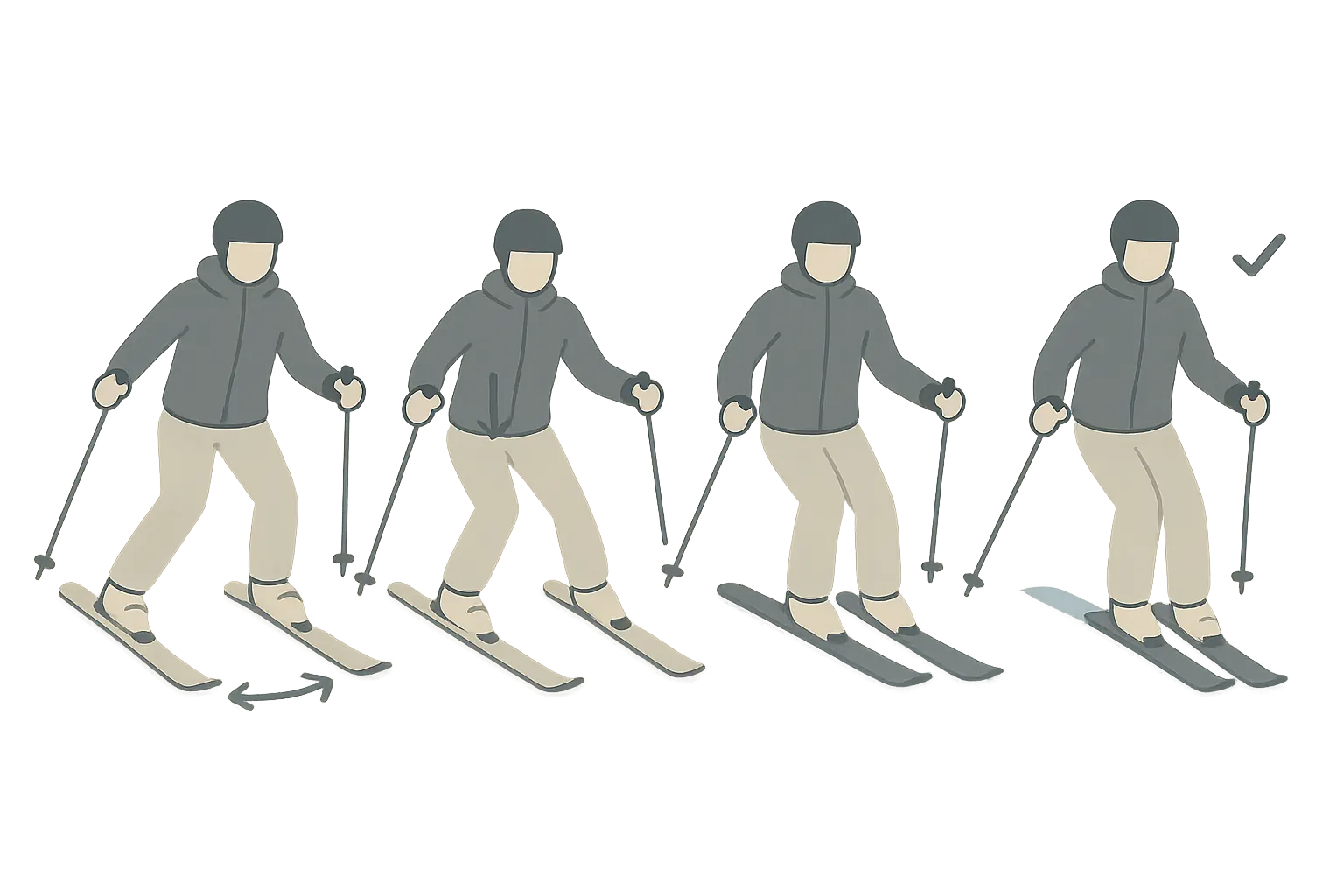
The goal is to progressively release the inside edge, narrow the wedge and let the skis match around mid-turn, finishing balanced over the outside ski.
Essence & Steps
-
1) Narrow the wedge
Start in a gentle wedge and gradually reduce the angle. Keep the hips over the feet and the shins gently pressing the boots.
-
2) Release the inside edge
Lighten the inside ski and flatten it slightly. This removes the resisting edge that holds the wedge.
-
3) Match the skis
As the inside ski flattens and points along the turn, the skis match around mid-turn. Keep the torso stable and eyes down the hill.
-
4) Finish & traverse
Complete the turn stacked over the outside ski. Traverse briefly in parallel before starting the next turn.
Typical Mistakes
- Forcing the match too early – loss of balance and speed spikes.
- Back seat stance – knees “lock”, skis won’t flatten.
- Looking inside the turn – collapsing inward, weak outside ski.
- Rigid joints – no edge release, the wedge stays locked.
FAQ
Do I need poles?
Helpful for timing, not mandatory. Light pole touches cue rhythm.
Where should I practice?
On a gentle blue slope with consistent snow and good visibility.
How do I know I’m parallel?
Tips and tails are similarly spaced; tracks show two lines without a wedge angle.
Instructor’s Tip
“Don’t force the skis together. Release the inside edge and let the match happen as a consequence.”
Conclusion
With good timing, balance and edge release, the transition becomes smooth and dependable. Soon, parallel turns will feel natural.