At a glance
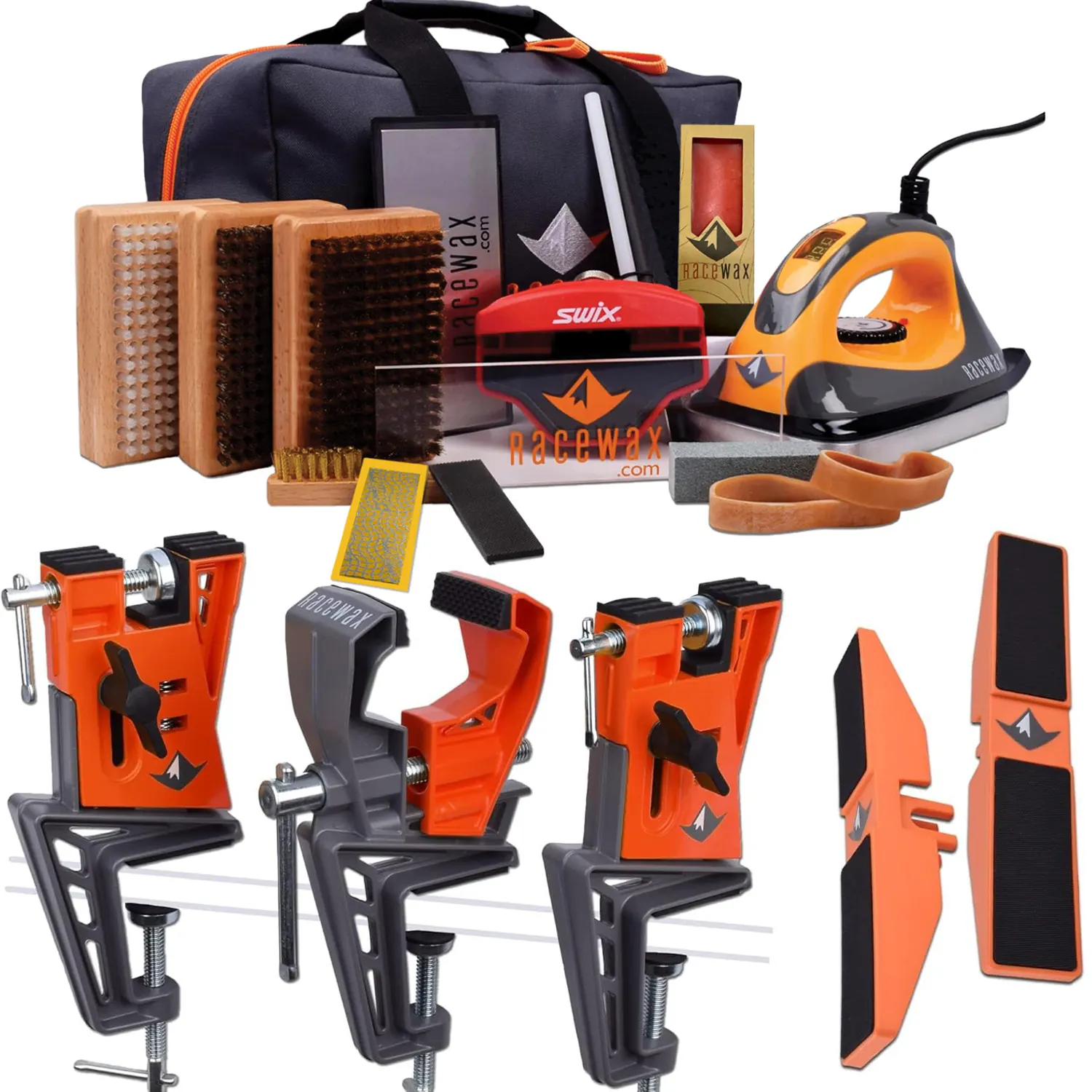
A basic tuning kit with universal wax and core tools delivers faster glide and reliable edge hold without a shop visit after every outing. Follow the sequence: clean the base, de-burr and true the edges, apply wax at the correct temperature, then scrape and brush thoroughly.
Key features
- Universal (all-temp) wax – works across a wide range of snow/temps.
- Temperature-controlled iron – stable plate reduces base overheat risk.
- Edge guides 88–90° – simple, repeatable side-edge sharpening.
- Brush set (brass + nylon) – cleans base pores and delivers the finishing polish.
- Diamond stone – knocks down burrs and refines the edge.
Specifications (typical starter kit)
- Wax
- Universal hydrocarbon block, ~120–140 °C iron temp*
- Iron
- Adjustable temperature, flat plate, 800–1000 W
- Scraper
- Plastic 3–4 mm with edge notch
- Brushes
- Brass (pre-wax/post-scrape) + nylon (finish)
- Edges
- Guide 88°/89°/90° + diamond stone 200–600 grit
- Extras
- Brake retainers, cloth, work gloves, bench/table protection
*Exact iron temp depends on the wax; always read the label and work in a ventilated space.
How to choose a kit & edge angle
- Kit to your habits: occasional resort days → universal wax + basic brushes; frequent skiing → add colder/warmer wax options.
- Edge angle: 88–89° bites harder on ice; 90° is more durable and calmer for beginners.
- Iron vs. household iron: a dedicated waxing iron holds temperature far more consistently.
- Brush logic: brass to open/clean; nylon to finish after scraping.
Pros & cons
Pros
- Faster skis and better control for minimal cost.
- Extends base and edge life with regular care.
- DIY tuning — dial in feel to your preference.
Cons
- Takes practice to achieve a pro-looking finish.
- Requires workspace and ventilation.
Step-by-step (basic service)
- 1) Base cleaning: brush with brass in tip-to-tail direction, then wipe dry.
- 2) De-burr edges: light passes with a diamond stone to remove nicks.
- 3) Sharpen: edge guide at 88–90°; short, even strokes from tail to tip.
- 4) Wax: drip wax onto the hot iron; keep the iron moving to avoid overheating the base.
- 5) Cool: wait 20–30 min for the wax to set.
- 6) Scrape: long strokes tip-to-tail; remove excess to a smooth surface.
- 7) Brush: nylon (or brass then nylon) until the base has a satin sheen.
Safety, tool care & storage
- Work in a ventilated area; use mask/eye protection when scraping/brushing.
- Keep scraper edge square (re-sharpen with a scraper sharpener as needed).
- Clean brushes periodically with compressed air or a vacuum.
- Off-season: apply a storage wax coat (don’t scrape) and store skis in a dry place.
FAQ
Is universal wax enough?
For most resort days, yes. For very cold/dry snow or warm spring slush, add a colder/softer specific wax.
How often should I wax?
Every 2–5 ski days or whenever the base looks dry/white. Frequent brushing and wiping prolong wax performance.
What iron temperature should I use?
Follow the wax label. Universal hydrocarbon wax is typically around 120–140 °C; always keep the iron moving.