Introduction
The FIS Code is universal. At advanced speeds and density, execution must be proactive: see earlier, leave room, stay predictable.
Essence / Protocols
-
Right of way & sight line
The skier ahead has priority. Design your line to never cut across their path; look 2–3 skiers ahead and plan escape space.
-
Speed & line control
Match speed to visibility and traffic. On steeps, shape turns tighter to bleed speed; slow down at merges and blind crests.
-
Overtaking without conflict
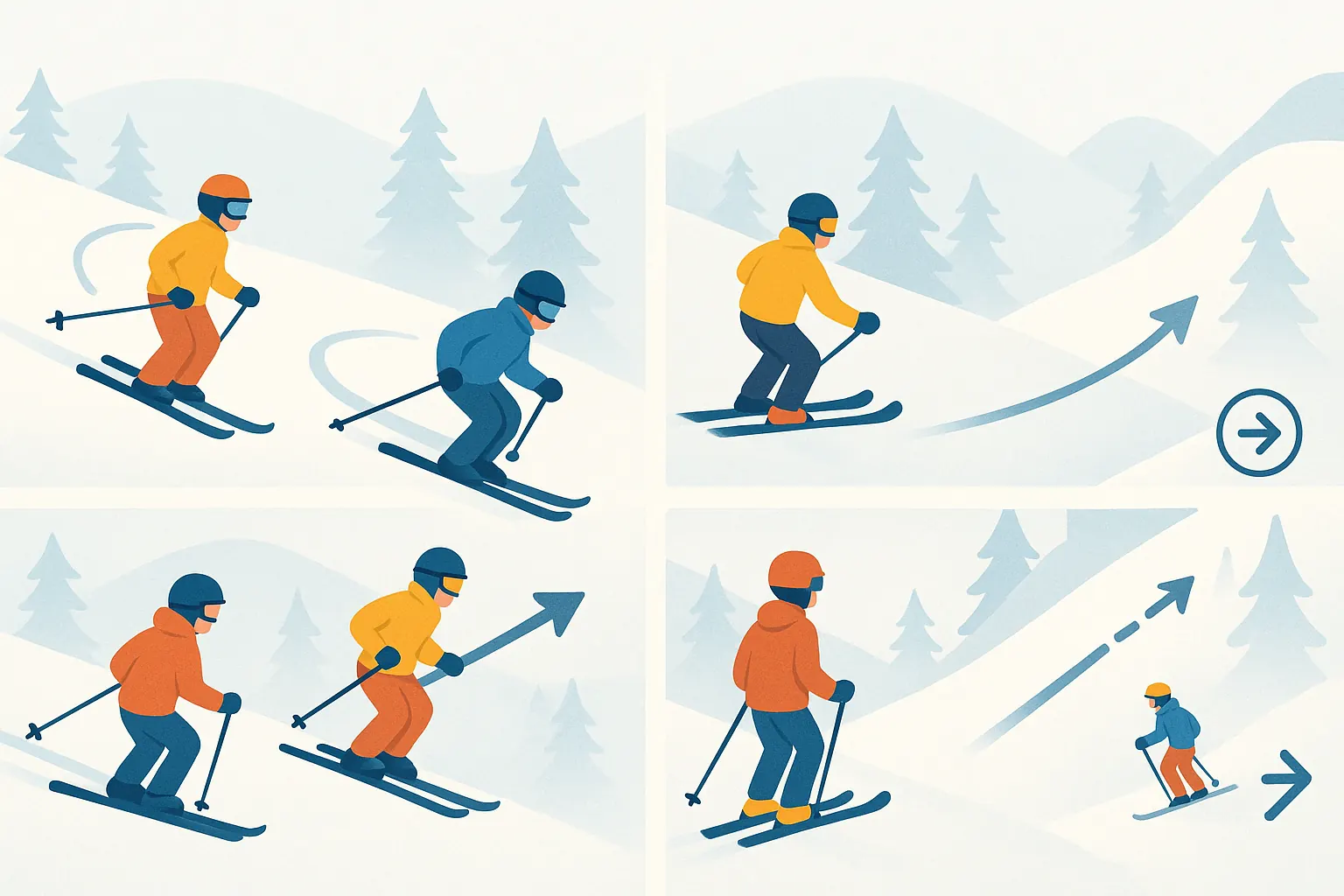
Overtake with ample margin, preferably from above, and never cut in. Signal intent with your line, not voice.
-
Stopping, starting & entering
Don’t stop in choke points or blind spots. Before starting or entering, check uphill and downhill, merge diagonally and accelerate to flow.
Typical mistakes
- Cutting in after overtaking (“closing the door”).
- Stopping below a blind crest or in a bottleneck.
- Starting without checking both uphill and downhill.
- Speed not matched to visibility and density.
Beginner questions
Do I always overtake from above?
Preferably, because it gives more space and predictability. The key is sufficient margin and never cutting across.
What if someone ahead turns suddenly?
Your duty is to ski so you can stop or alter line without contact. Always keep an escape plan.
Instructor’s tip
“Speed is fine when predictable. Look far, ski soft, and leave others options.”
Conclusion
The FIS Code is the baseline. Advanced skiing applies it with lines that give others space and time to react.