Introduction
The basic stance is the starting point for every movement on skis: it helps you maintain balance, move your skis effortlessly and stay in control of speed and direction. With the right stance, you’ll be more stable and confident on the slope.
Explanation / Essence
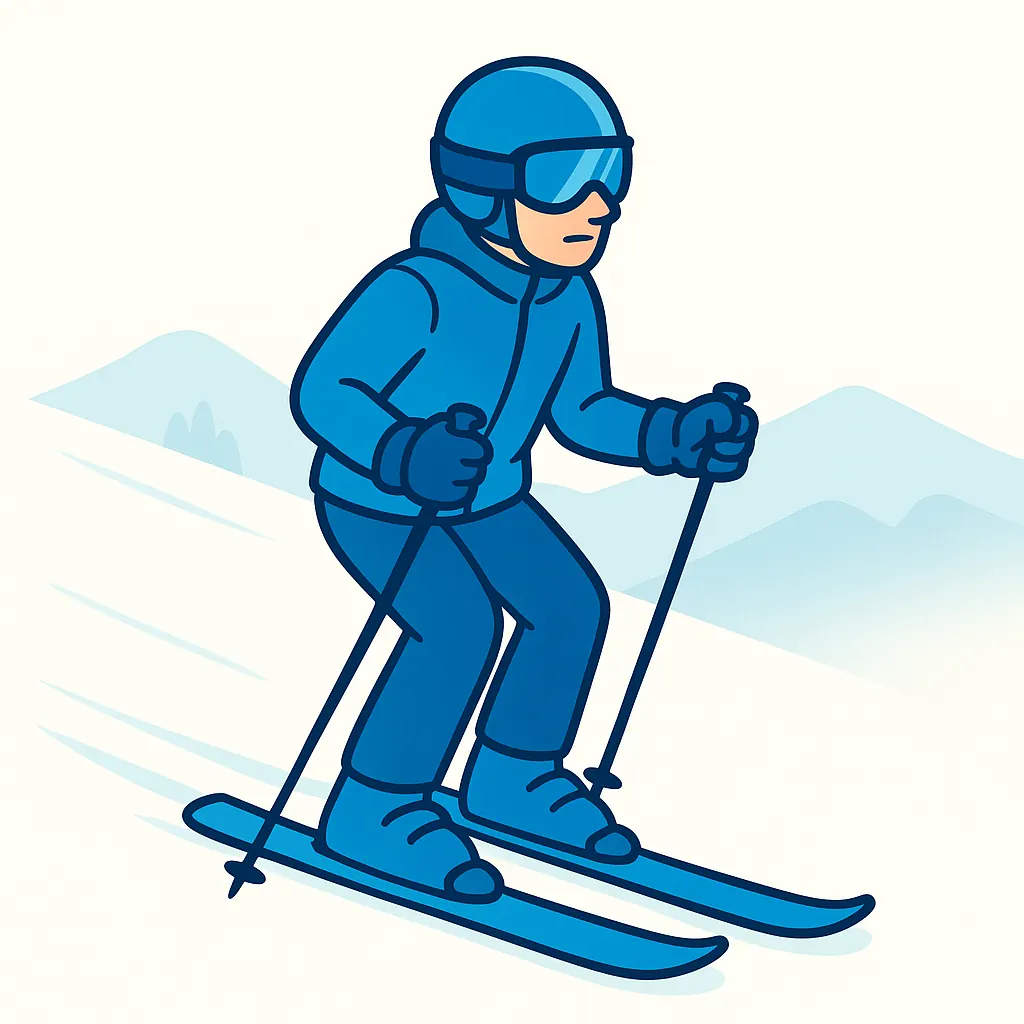
The basic stance is a neutral, stable position from which you can easily switch to braking, turning or accelerating. Position yourself as follows:
-
Skis parallel, hip-width apart
Feet about hip-width, skis parallel and flat on the snow.
-
Weight slightly forward
Shins leaning into boot tongues, feeling a gentle forward pressure.
-
Soft knees, hips above feet
Knees slightly bent; neutral spine; avoid sitting back.
-
Hands forward, eyes ahead
Imagine holding a tray; look where you want to go, not at your skis.
-
Breathing and micro-movements
Breathe naturally and keep joints slightly active – this maintains balance.
Typical Mistakes
- Leaning back (weight on heels) – loss of control.
- Looking at skis instead of ahead – delayed reactions.
- Arms stiff and close to body – instability on uneven terrain.
- Feet too wide or too close – poor balance.
- Loose boots – weak transfer of movements.
Beginner Questions
How do I know if I’m too far back?
You should feel a light shin pressure against your boot tongues. If your heels lift inside the boots, you’re leaning back too much.
Should my knees go over my toes?
Slightly yes – knees soft and forward, but not exaggerated. Focus on “active” shins, not a deep squat.
What should I do with the poles?
Hold them lightly, tips behind the bindings; hands in front as if carrying a tray. They should not hang behind you.
Instructor’s Tip
“On a gentle slope, do 5–10 glides in the basic stance focusing on forward pressure and eyes ahead. Stable stance = easier turns.”
Conclusion
The basic stance is the foundation of all ski skills. Once you automate balance, vision and slight forward weight, you’ll find braking and turning much easier to learn.