Introduction
Chop, sticky piles, soft pockets and scraped ice change resistance underfoot. The answer: quiet torso, soft absorption and smart pressure management along the ski.
Four essential steps
-
Setup & line
Slightly wider stance for stability; choose lines that slice through softer sections and avoid rigid piles. Look 2–3 ski lengths ahead.
-
Absorb–extend timing
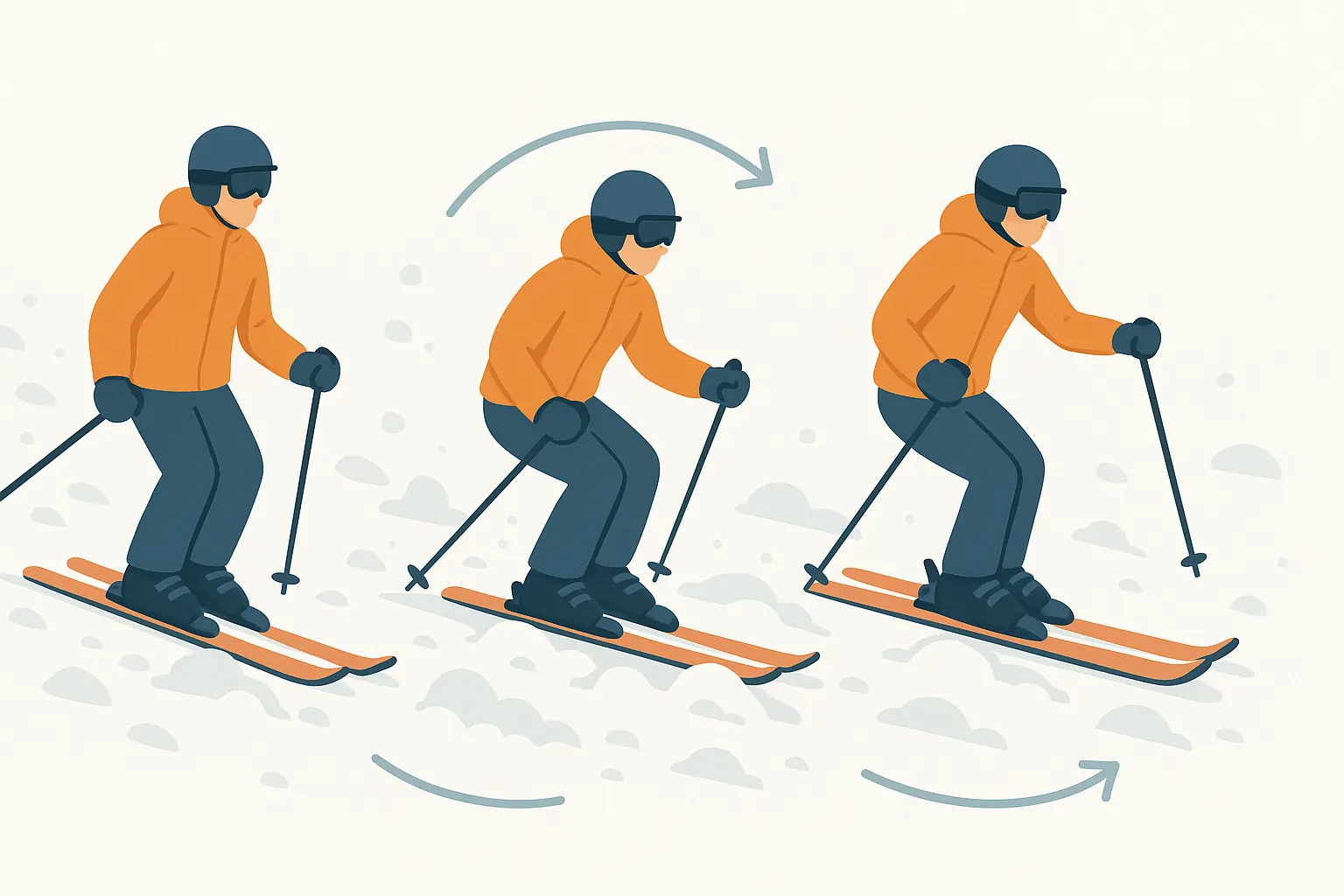
Soften before a lump, maintain snow contact and extend after impact to re-center. No jumping.
-
Pressure & edge management
“Light in – strong out”: build edge/pressure through the second half of the turn; avoid hard braking over piles.
-
Pole rhythm & quiet torso
Short, consistent plants before irregularities stabilize the shoulders while the legs do the work.
Typical mistakes
- Rigid body and straight legs — bouncing and loss of contact.
- Hard braking over piles — thrown out of balance.
- Over-rotating the shoulders — skis leave the line.
- Poor look-ahead — late absorption and pressure changes.
Common questions
Should I slow down in chop?
Yes. Slow just enough to keep absorption rhythm and solid snow contact.
Where should pressure go?
Light entry, then build through the middle/out of the turn. Keep your center over your feet.
How wide should my stance be?
A touch wider than hips for stability while preserving independent leg action.
Instructor’s tip
“Don’t fight the chop—absorb it. Eyes up, quick pole plants, and add pressure only once the skis are calmly engaged.”
Conclusion
Variable terrain turns predictable when your absorb–extend timing and pressure control become automatic—your line and rhythm stay smooth.