Introduction
This SOP supports fast, coordinated recovery of a buried partner. It is not a substitute for certified training—practice often and always carry beacon, probe and shovel.
Essence / steps
-
Scene safety & command
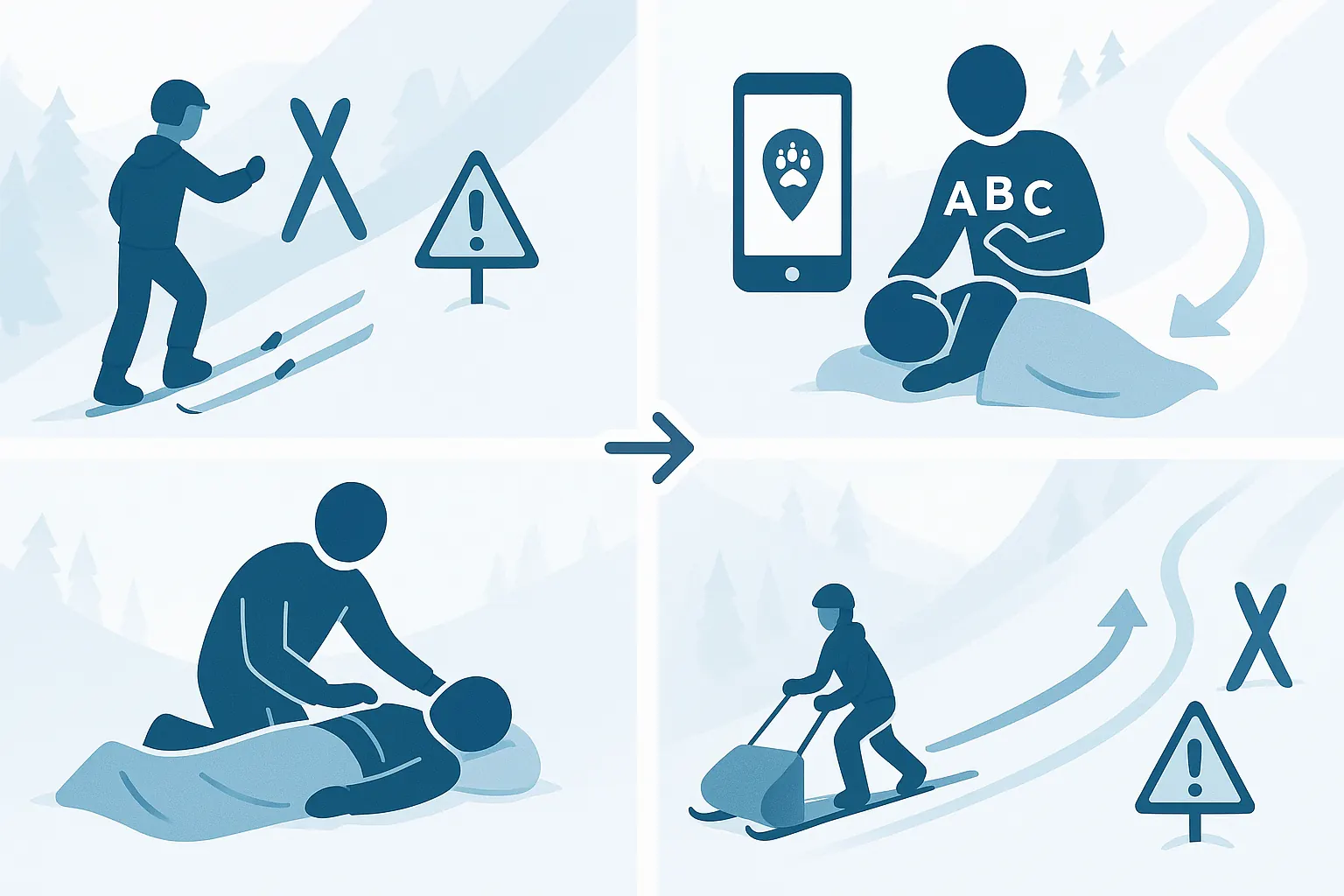
Mitigate hangfire, spotter in a safe zone, quick headcount. One leader runs commands and calls rescue.
-
Beacon search
All to search. Conduct signal search, then fine search to the lowest reading (~0.5–2 m).
-
Probe pinpoint
Probe in a 25–30 cm grid around the lowest reading until a firm strike. Leave the probe in place and mark.
-
Shovel & airway
Excavate from downslope in a V/conveyor pattern to the head. Clear the airway, check breathing and continue care until handover.
Typical mistakes
- Too many voices—no single command.
- Probing before completing the fine search.
- Digging straight down instead of from downslope.
- Failing to expose the airway immediately on contact.
Questions
How dense should the probe grid be?
Use a 25–30 cm grid around the lowest beacon reading for speed and certainty.
Where do we start shoveling?
Start on the downslope side, one to one-and-a-half burial depths away, creating a ramp to the victim’s head.
Instructor’s tip
“Speed comes from organization: one leader, clear roles and frequent field practice.”
Conclusion
Drill the SOP: safety, beacon, probe, shovel and airway. Consistent practice shortens burial time to survival.