Introduction
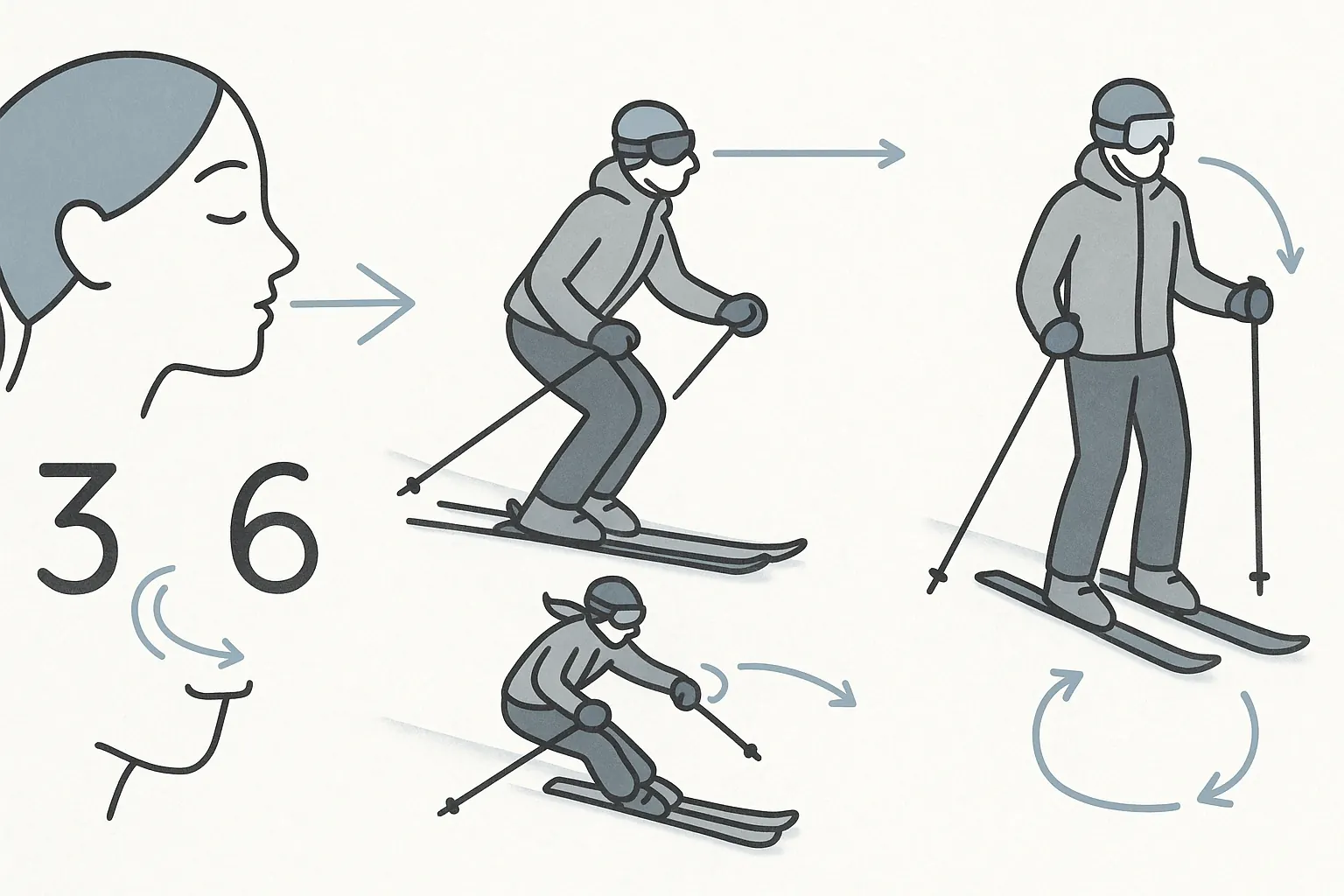
Develop efficient breathing and endurance pacing for demanding runs: steady cadence (2–2 / 3–3), exhale cues in high-load sections, and quick resets to prevent overbreathing.
Essentials / steps
-
Cadence & diaphragm
Practice nasal, diaphragmatic inhale and even exhale: 2–2 for moderate effort, 3–3 on flats, 1–2 in the finish.
-
Exhale as a cue
Mark entry into high-load sections with an exhale—tension drops, stability rises.
-
Threshold intervals
On-slope: 20–40 s work / 60–90 s easy glide × 4–6, while keeping cadence; progress by work duration first.
-
Quick reset protocol
Stop, 3–5 slow breaths (4–6 s), longer exhale; restore focus, then continue. If dizzy—extend rest or stop.
Typical mistakes
- Shallow, rapid chest breathing—fades late in runs.
- No defined rest—technique quality drops.
- Forcing one cadence regardless of terrain rhythm.
- Ignoring dizziness/tingling—signals to stop.
Questions
Nasal or mouth breathing?
Favor nasal to regulate rhythm and filter air; combine with mouth in hardest sections near the finish.
How do I gauge “too fast”?
If you can’t hold a 2–2 cadence for 15–20 s, shorten the next interval and extend rest.
Instructor’s tip
“Let the exhale be your metronome. When the course tightens, lengthen the exhale—skis calm down.”
Conclusion
Controlled breathing with smart pacing preserves precision at the end of the run. Progress gradually and listen to body signals.