Introduction
The goal is pure speed with control: a flat base for stable contact, precise edge angles for grip and direction, then hot wax and structure matched to real snow.
Steps
-
Inspect & flatten base
Clean, check flatness with a true bar. If needed, stone-grind or gently hand-flatten; preserve factory structure if sound.
-
Set edge bevels
Set base bevel (e.g., 0.5°) and side edge (e.g., 3°) per discipline and snow. Work one direction with guides; avoid sawing.
-
Deburr & polish
Remove burrs with diamond stones from coarse to fine; polish to uniform sheen. Protect base with tape near the edge.
-
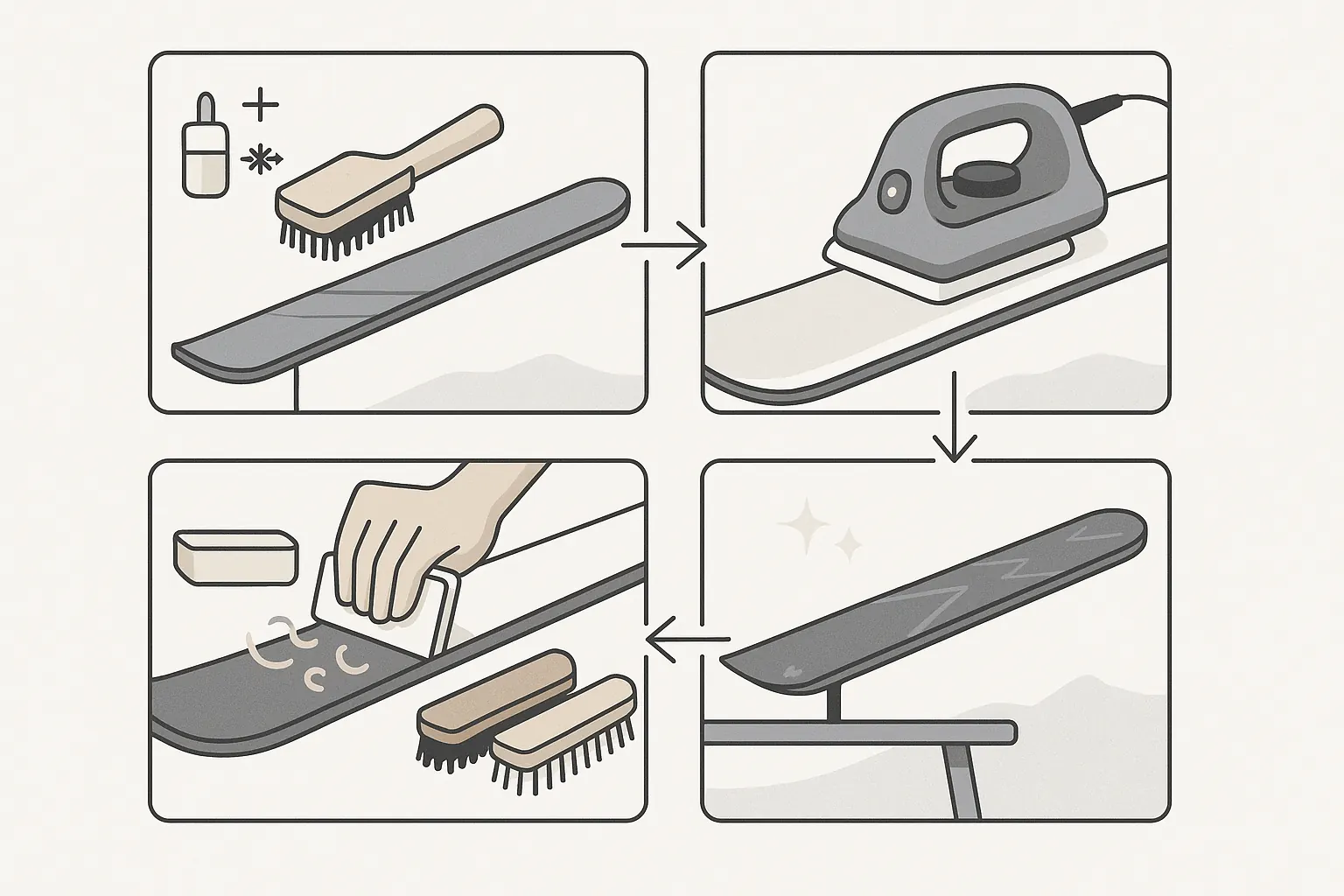
Hot wax & final structure
Apply hot wax for expected temp/humidity; cool fully, scrape in passes and brush (nylon → horsehair). Use a structure roller if needed.
Typical mistakes
- Excessive base bevel or uneven angles along the ski.
- Skipping deburring — edges feel grabby and slow.
- Scraping before the wax fully cools.
- Structure too coarse or mismatched to snow.
Questions
Which bevels should I pick?
Common SL/GS baseline: base 0.5°, side 3°. Adjust to snow hardness and discipline.
How often to wax?
For training: almost daily. For fast recreational skiing: after 1–2 hard days.
Instructor’s tip
“Go slow to go fast. Remove minimal material, keep edges consistent — longevity beats aggression.”
Conclusion
Flat base + precise edges + correct wax & structure = speed and security. Log your setup and conditions for repeatability.