Introduction
Build fast, accurate reactions without losing balance. Random visual and audio triggers speed decision-making, while start–stop tasks cement centered posture.
Steps
-
Visual cues
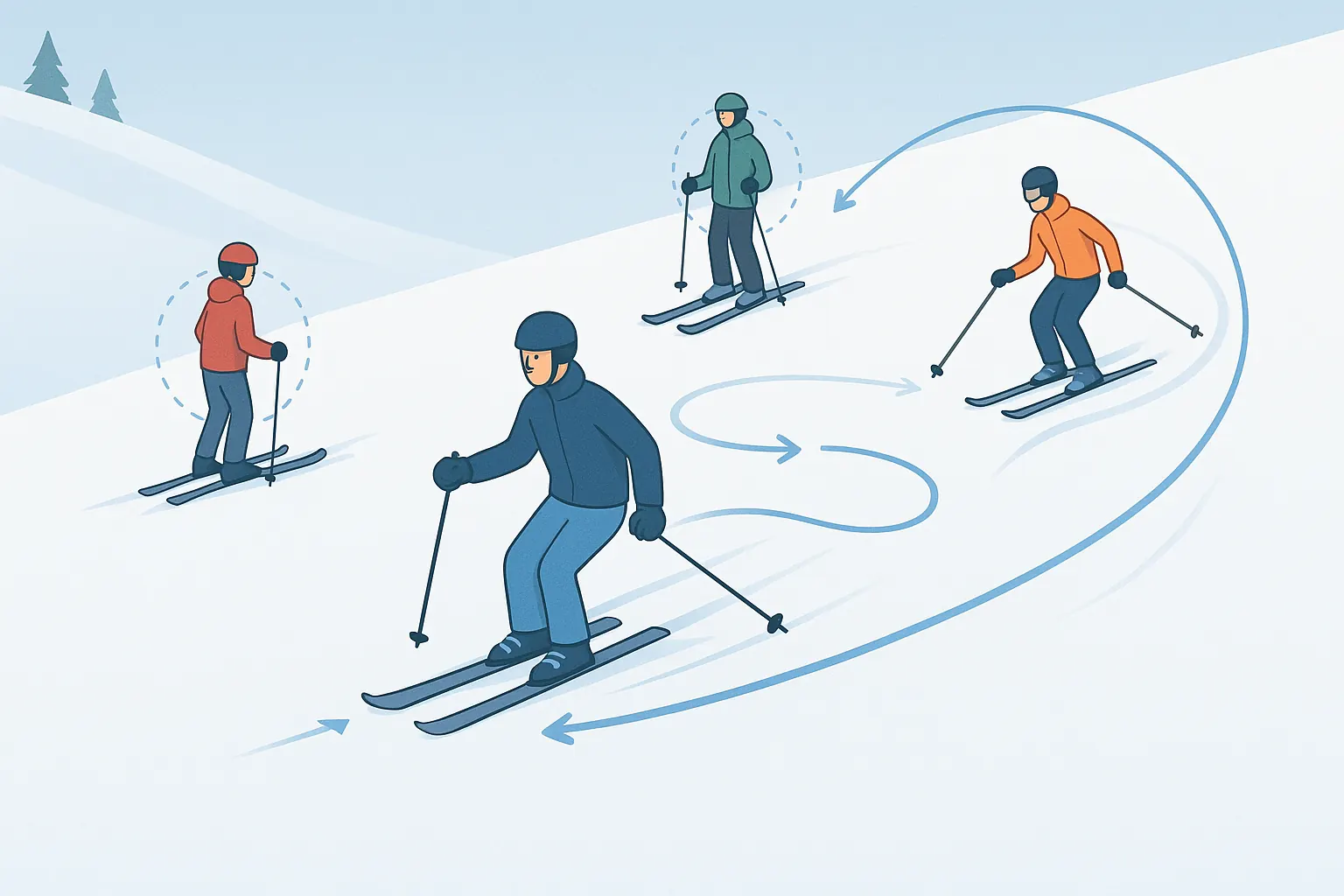
Partner signals left/right/color; you change line or rhythm within <350 ms. Eyes forward, no shoulder twist.
-
Audio cues
On a short beep, perform start–stop: two quick turns then a controlled halt. Keep breathing steady.
-
Variable tempo
Random timer switches slow↔fast. Maintain center over bindings and a quiet transition.
-
Test & log
Count correct reactions in 60 s. Note errors (late, too forward/back) and plan corrections.
Typical mistakes
- Twisting the upper body early.
- Losing centering during the stop phase.
- Freezing on dual stimuli (sound + color).
- No log—no reproducible progress.
Questions
Do I need special gear?
No—use a partner, timer/phone, and colored markers.
How often?
2–3 short sessions per week (10–15 min) alongside your technique work.
Instructor’s tip
“React fast, move softly. The fastest decision is worthless without a quiet transition.”
Conclusion
Reflex + control = speed without chaos. Keep results and rotate cues to prevent adaptation.