Introduction
Use this post-ski routine to restore range, down-regulate fatigue, and lower injury risk. It combines a quick self-check with mobility, tissue care, breath work, sleep and simple strength habits.
Steps
-
Quick body scan & pain scale
Rate tight spots (0–10), check knees, hips, back and shins. If sharp pain or swelling → stop and consult a pro.
-
Mobility & tissue care (8–12 min)
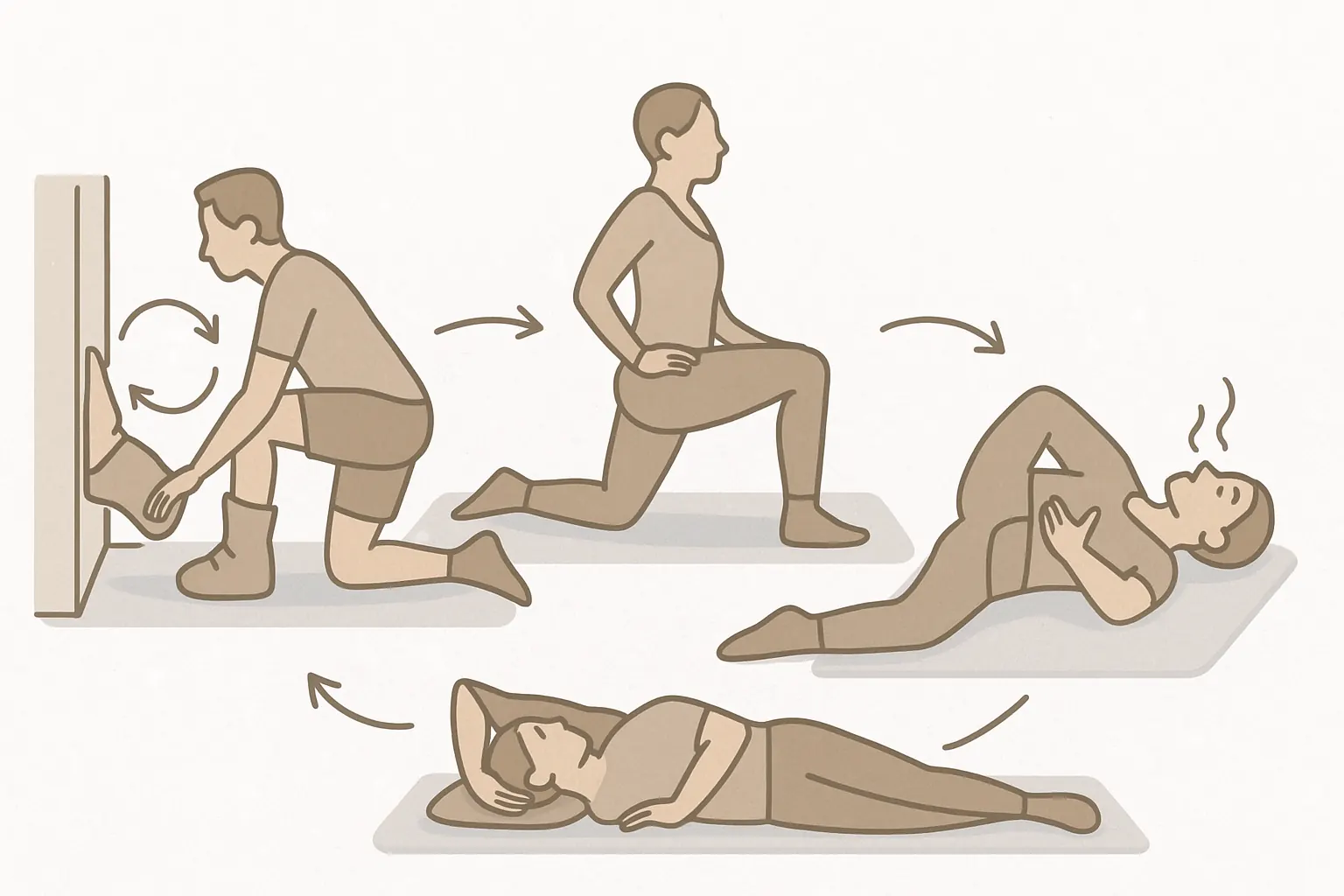
Ankles: knee-to-wall + circles. Hips: 90/90 or lunge stretch. T-spine: “open book”. Optional: 2–3 min light foam roll calves/quads.
-
Recovery load: breath, protein, sleep
5 min nasal breathing with long exhale (1:2). Rehydrate and include protein + carbs in the next meal. Target 7.5–9 h sleep.
-
Prevention habit (2–3x/week)
Strength & balance: split squats, hamstring bridges, calf raises, single-leg balance with eyes soft; progress slowly.
Typical mistakes
- Skipping cooldown entirely on “easy” days.
- Forcing deep stretches into pain or joint shear.
- Using high-intensity plyometrics when fatigued.
- Ignoring persistent swelling, sharp pain or instability.
Questions
How often should I run this routine?
After every ski day. Keep it short and consistent—intensity is for training days, not late at night after the slopes.
Can I replace mobility with a sauna or hot bath?
Heat helps relaxation, but keep 5–10 minutes of movement so joints regain range specific to skiing.
Instructor’s tip
“A little, always beats a lot, sometimes. Anchor a 10-minute routine to dinner or shower time and you’ll feel it next morning.”
Conclusion
Recovery protects tomorrow’s technique. Keep the flow simple and pain-free, and add strength habits a few times per week.