Introduction
FIS rules are the traffic code of the mountains. They make your riding predictable, maintain safe spacing, and reduce collisions. Below are 4 practical steps to apply them today.
Applying the FIS rules in practice
-
Assess conditions before moving
Look uphill and downhill: visibility, traffic, ice, crossings, signs and nets. Choose a line that won’t endanger others.
-
Ride in control and adjust speed
Always be able to stop. Match your speed to your skills, the slope, snow and visibility. Safety comes first.
-
Keep distance, overtake and stop wisely
Overtake with ample space and without surprise. Don’t stop in narrow or blind spots. When joining or starting — check uphill.
-
Help in accidents and identify yourself
If an accident happens, stop and help, call patrol and remain available for identification.
Typical mistakes
- Riding faster than your ability (busy or icy slopes).
- Overtaking in blind areas or without enough clearance.
- Stopping just after a rollover or in a bottleneck.
- Joining the slope without checking uphill.
Beginner questions
Do FIS rules apply on blue slopes too?
Yes. They apply everywhere — regardless of slope color or your experience.
Who has “priority” on the slope?
The skier in front and below you. You’re responsible for not endangering them.
What should I do if I see a fall?
Stop safely above, mark the spot with skis and call patrol. Approach only if it’s safe.
Instructor’s tip
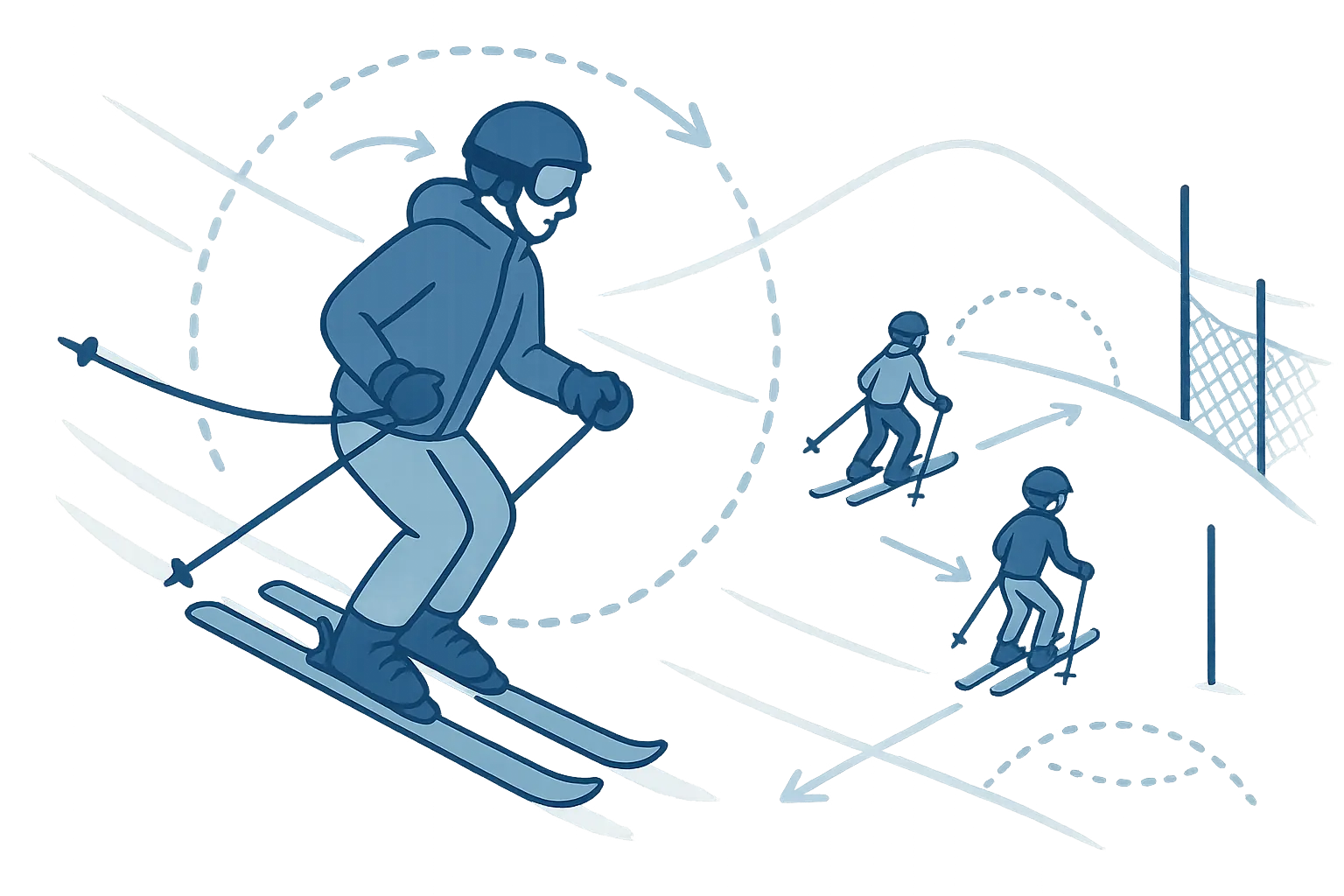
“Imagine a protective ‘bubble’ around you and others (at least 2–3 ski lengths). Keep it and you’re already following half of the FIS rules.”
Conclusion
FIS rules make you a predictable, safe skier. Practice assessment, speed control and spacing, and everyone’s day on the mountain gets better.