Introduction
These four drills build ankle range, knee tracking and soft landings to reduce strain on ligaments and make turn transitions cleaner.
Steps
-
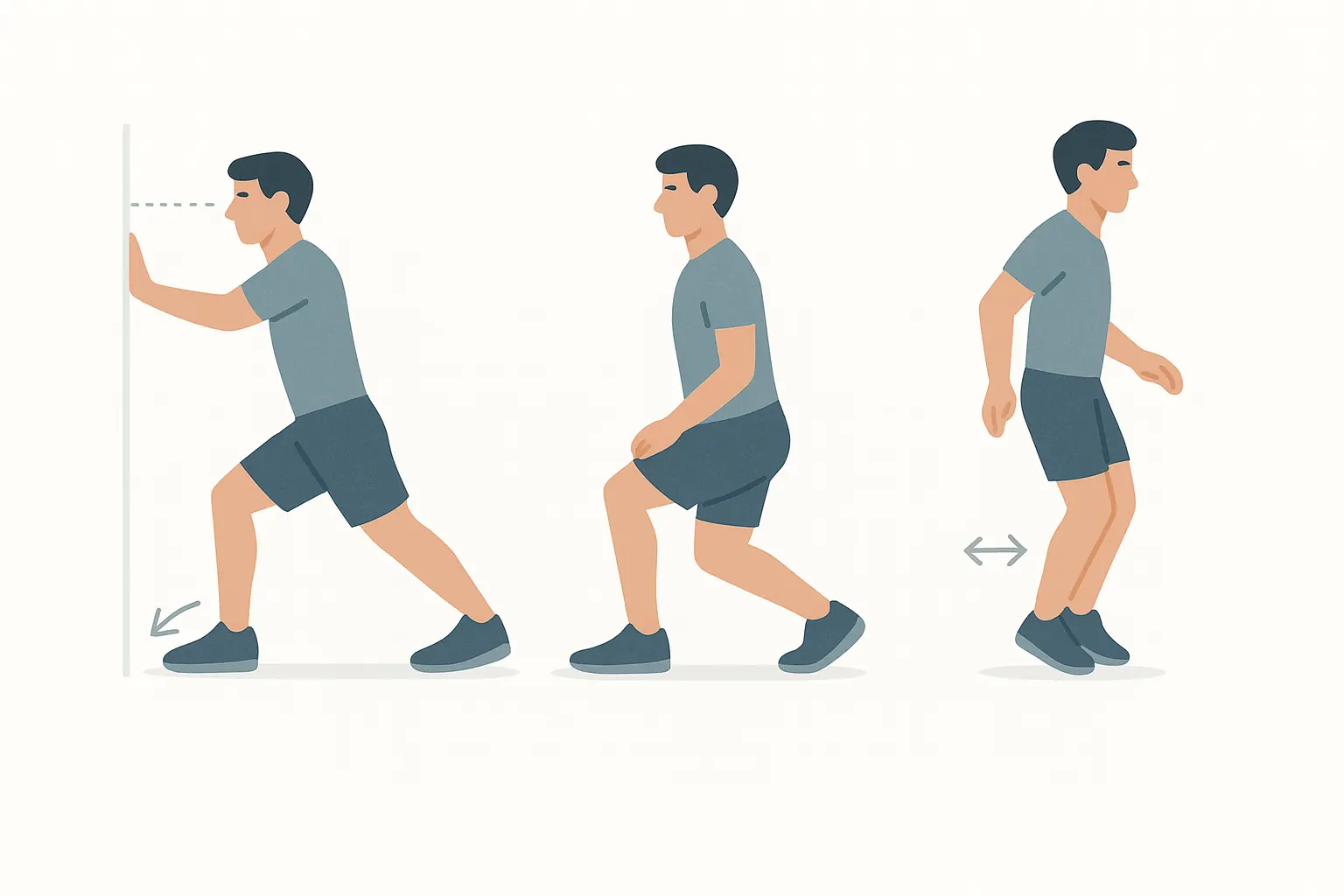
Ankle dorsiflexion (wall taps)
Heel stays down as the knee gently touches the wall; foot arch supported. 3×8/side.
-
Knee-over-toe control
Shallow split squat with knees tracking toes; pelvis neutral, torso quiet. 3×6 slow/side.
-
Calf & tibialis raises
Edge of a step: calf raises, then toe raises to strengthen the shin. 2×12 each.
-
Mini plyometrics – soft landings
Tiny in-place and fore–aft hops with quiet landings; knees follow toes. 3×20–30 s.
Typical Mistakes
- Knees collapsing inward (valgus) – think “spread the floor” and engage glutes.
- Heels lifting during mobility – keep the heel down.
- Loud, hard landings – aim for quiet, short amortization in the ankle.
- Torso tipping forward – ribs stacked over pelvis, eyes forward.
Beginner Questions
Is this enough as a pre-ski warm-up?
Yes—paired with 3–5 minutes of general warm-up. It primes ankles and knees for the first runs.
Front-of-knee pain on squats—what should I change?
Reduce range, slow down, and track knees with toes. Stop if pain persists and consult a professional.
How often?
2–4× weekly off-snow; on snow, use it as a short primer before your first run.
Instructor’s Tip
“Quiet landings begin at the ankle. Stable ankle and knee tracking make carving transitions smooth with less tendon stress.”
Conclusion
A little prehab goes a long way: small ranges, soft landings and frequent practice bring durable, fluid turns.