Introduction
Surprises happen: blind rolls, icy patches, someone falling or cutting across. The keys are to see it early, slow by shaping turns, pick a safe escape line, and stop at the side.
Essence / Steps
-
See early and plan an exit
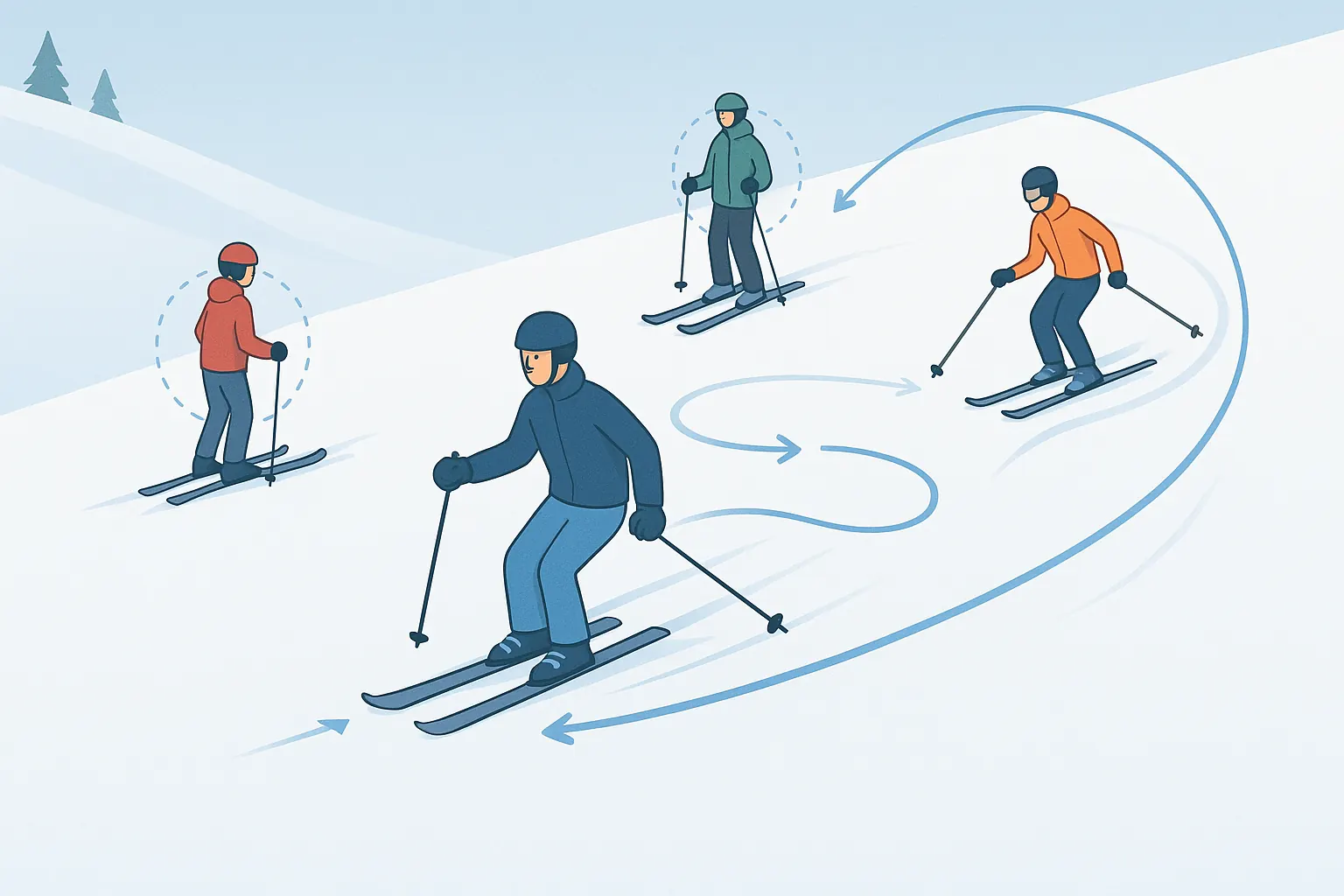
Look 2–3 turns ahead, check uphill before moving, and increase spacing. Keep a “plan B” corridor near the edge.
-
Slow by shaping turns
Pressure progressively and finish turns across the hill. If needed, sideslip or make a hockey stop when it’s clear.
-
Choose an evasive line
When someone appears, pick an open corridor with a large lateral gap. Don’t straight-line; stay in control and look where you want to go.
-
Stop safely and re-enter
Stop by the side, avoid blind crests and merges. Before re-entering, look uphill and yield to the downhill skier.
Typical Mistakes
- Freezing and going straight without control.
- Sudden stops in blind spots or at merges.
- Passing too close without a lateral buffer.
- Re-entering without looking uphill and yielding.
Common Questions
What if I catch an edge?
Flatten slightly to release, lower your center of mass, sideslip to reduce speed, and steer toward a free area.
How to handle ice?
Reduce edge angle to avoid a sudden catch, absorb, seek softer snow at the sides, then re-engage edges progressively to finish the turn across the hill.
Someone falls in front of me?
Immediately shape turns to bleed speed and pass with a large lateral gap. Stop by the side if you need to help.
Instructor’s Tip
“Always keep a plan-B corridor near the edge. Control speed with turn shape, not straight-lining.”
Conclusion
Reacting to surprises is about planning and control: see early, slow across the hill, choose a safe line, stop at the side, and re-enter correctly.