Introduction
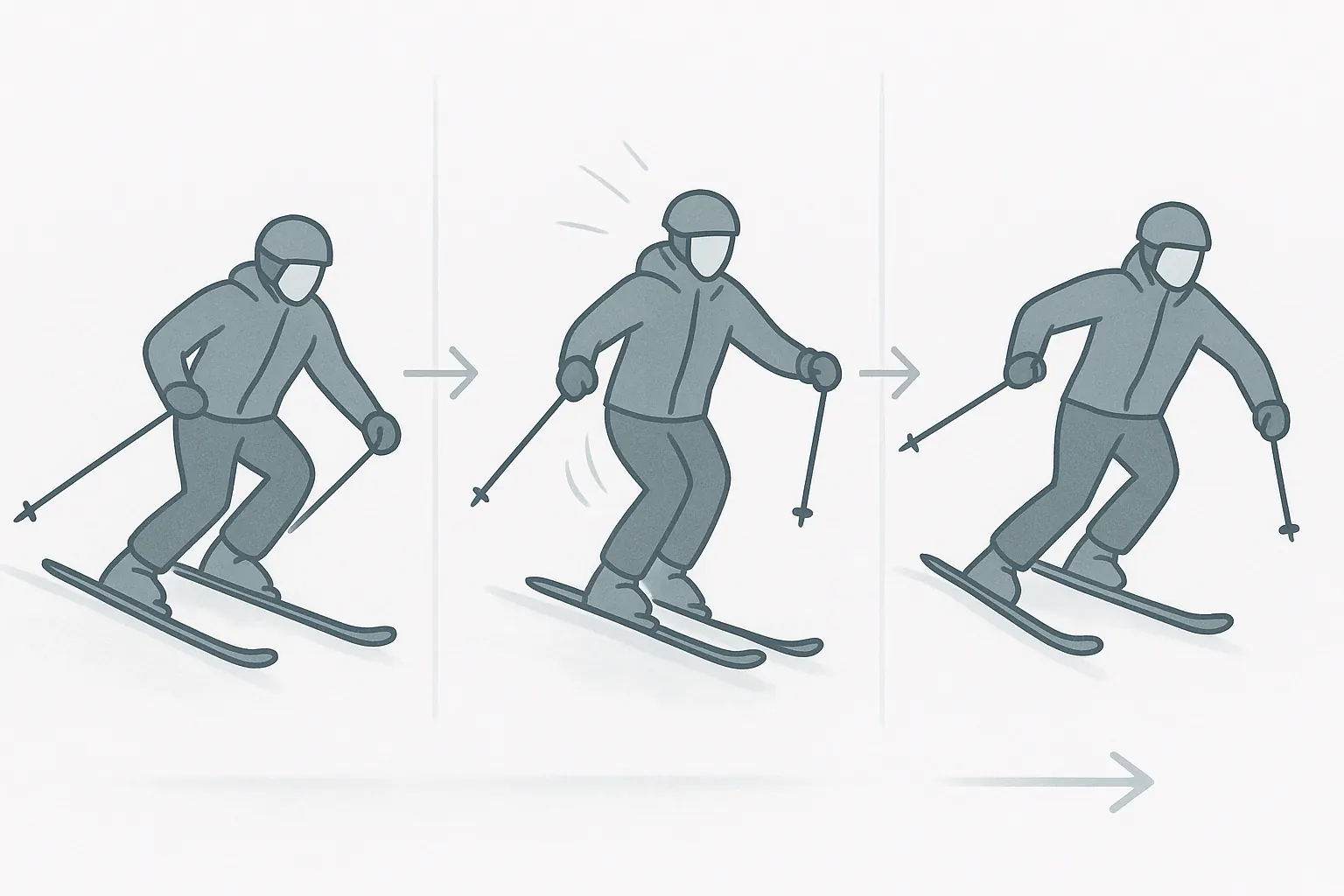
Rebound uses ski elasticity. Late-turn pressure bends the ski; releasing that energy helps you flip to the new edge fast for rhythmic shorts.
Four essential steps
-
Load at turn finish
Progressively increase edge/pressure to the outside ski in the second half of the turn—store energy in the ski.
-
Release & edge change
Soften the joints and let the ski rebound. Use that pop for a quick, clean edge change without jumping.
-
Absorb & re-center
Absorb the rebound softly—hips over feet—then set up balanced for the new turn.
-
Pole rhythm & quiet torso
A short plant at transition stabilizes the shoulders while the legs do the work.
Typical mistakes
- Bouncing too high — losing snow contact and control.
- Switching edges before enough energy is built.
- Turning the shoulders instead of the legs.
- Hard braking instead of progressive pressure.
Common questions
Does rebound mean jumping?
No. Aim for elastic release and a fast edge flip with maintained snow contact.
Which ski carries more?
The outside ski carries late-turn load; the inside ski supports balance and transition.
Where should I look?
One to two turns ahead to cue timely transition.
Instructor’s tip
“Let the ski work: build pressure late, then release and ride the rebound to the new edge.”
Conclusion
Controlled rebound fuels fast yet stable short turns—less effort, more precision and flow.