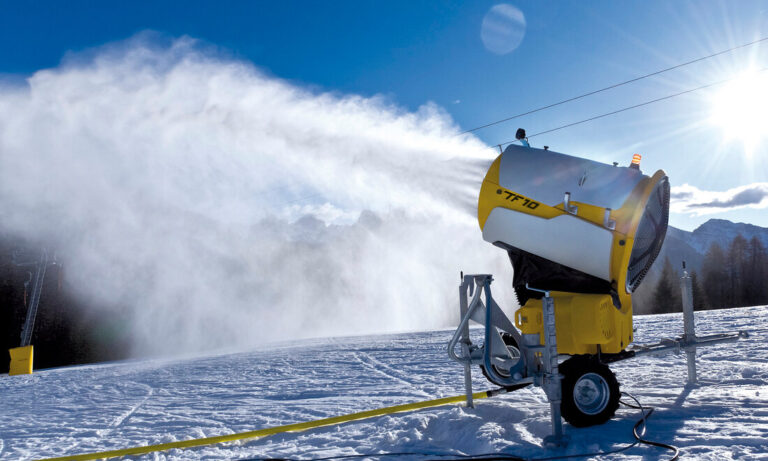
The short story: the window that makes winter
Reliable seasons depend on wet-bulb temperature — a function of air temperature and humidity that dictates whether droplets freeze into snow before they land.
Modern networks combine pumps, compressors or fans, automated valves and weather stations to harvest every cold hour, laying a resilient base on key connectors before expanding coverage.
From droplet to flake: inside a snow gun
- Atomization: water is broken into fine droplets (nozzles + compressed air for lances, or a fan stream for fan guns).
- Nucleation: an icy core seeds rapid crystallization in flight.
- Flight & cooling: drier/colder air and longer throw yield colder, denser man-made snow.
- Density control: operators tune water flow and pressure for base layers versus finish coats.
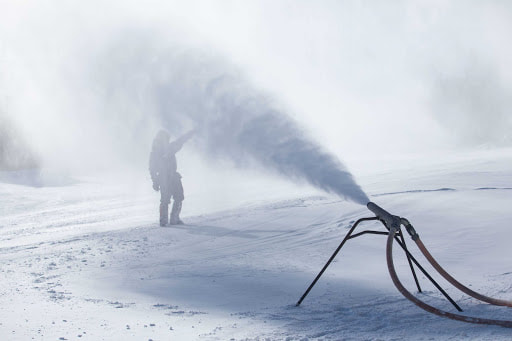
Systems and efficiency
Lance systems
Lower energy per cubic metre, prefer colder windows and higher throws; excellent for long gentle pistes.
Fan guns
Wider throw and more flexibility in marginal conditions; typically higher hourly draw, strong for spot coverage.
- Automation: wet-bulb, wind and pressure sensors with remote control for precise on/off.
- Hydraulics: pumps, reservoirs and ring mains ensure stable pressure and flow.
- Strategy: prioritize the resort “spine” first, then expand laterally as windows allow.
Costs: CAPEX and OPEX
- CAPEX: guns (lance/fan), pumps & compressors, pipework, electrical, ponds/lakes, control software.
- OPEX: electricity, water (permits/fees), nozzle/bearing service, logistics and staffing.
- Drivers: climate window length, elevation, wind exposure, target snow quality and opening deadlines.
- Optimization: precise targeting, night shifts, automation, water blending/recirculation, snow depth mapping.
It’s not “more snow at any cost” but the right snow, right place, right time with sustainable unit costs.