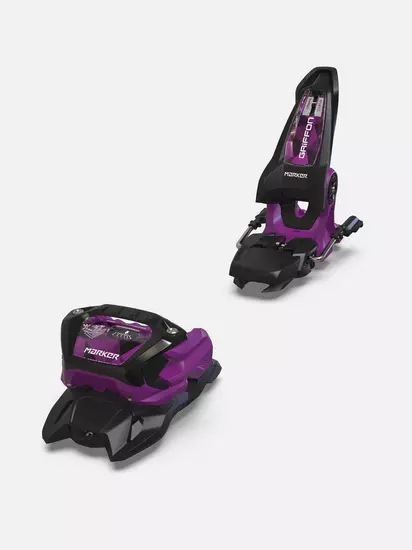
At a glance
Griffon 13 is a benchmark all-mountain binding delivering reliable release and firm power transfer for solid intermediates and advanced skiers. Low stand height and a stout heel add stability at speed, while multiple brake widths make matching modern wider skis straightforward.
Key features
- DIN 4–13 – covers a broad range of skier weights and styles.
- Stable power transfer – rigid heel and wide platform for precise edge control.
- Sliding AFD – consistent release; ID versions allow AFD height to match sole type.
- GripWalk compatibility* – ID toe accepts GW and classic alpine soles.
- Multiple brake widths – easy to pair with your ski’s waist.
Specifications (typical for Griffon 13)
- DIN range
- 4–13
- Stand height
- ~23–24 mm*
- Brakes
- 90 / 100 / 110 / 120 mm
- Sole compatibility
- Alpine ISO 5355; Griffon 13 ID also GripWalk ISO 23223
- Materials
- Metal components with reinforced polymers
- Use
- All-Mountain / Park / Lift-served freeride
*Exact numbers and component names vary by model year. Always verify the official spec and markings on your binding.
How to choose DIN & brake width
- Brake width: pick ~5–15 mm wider than ski waist (e.g., 100 mm brake for a 92–98 mm ski).
- BSL (boot sole length): read the mm value on your boot (e.g., 300 mm) — needed for precise mounting.
- DIN from charts: depends on weight, height, ability, and BSL. Start with the manufacturer table, then fine-tune at a ski shop.
- Release test: have a certified shop perform toe/heel function tests for safety.
Pros & cons
Pros
- Wide DIN range suits most resort skiers.
- Firm, precise feel with strong edging.
- Multiple brake widths for clean fit.
Cons
- Older non-ID versions aren’t GripWalk compatible.
- Heavier than ultra-light touring bindings (not intended for uphill travel).
Setup & mounting
- Mounting: leave drilling/screws to a shop using your BSL and the ski’s recommended mount point.
- AFD: on ID versions, set AFD height so it slides freely with Alpine/GW soles (no sticking).
- Forward pressure: check the heel indicator window — it must sit in range with the boot clicked in.
- DIN: match values at toe and heel; don’t exceed recommendations without a tech’s assessment.
Care & safety
- Keep the AFD and toe area free of dirt/ice for consistent release.
- Inspect screws and brakes after hard impacts or crashes.
- Annual service: have a shop run a calibrated release test each season.
FAQ
Is it compatible with GripWalk soles?
Yes — the Griffon 13 ID version is. Confirm the “ID” marking or ISO 23223 compatibility on your toe/AFD.
Which brake width should I choose?
Generally 5–15 mm wider than your ski’s waist. Too narrow can bind; too wide may drag in snow during carving.
Can I use these for park jumps?
Griffon 13 is a common park/all-mountain choice. Make sure DIN is correctly set and the mount is solid, ideally by a reputable shop.