Introduction
A short end-of-day routine prevents rust, odors and premature wear. All you need is a dry towel, a ventilated space and a few minutes of care.
Steps (HowTo)
-
Wipe skis and edges
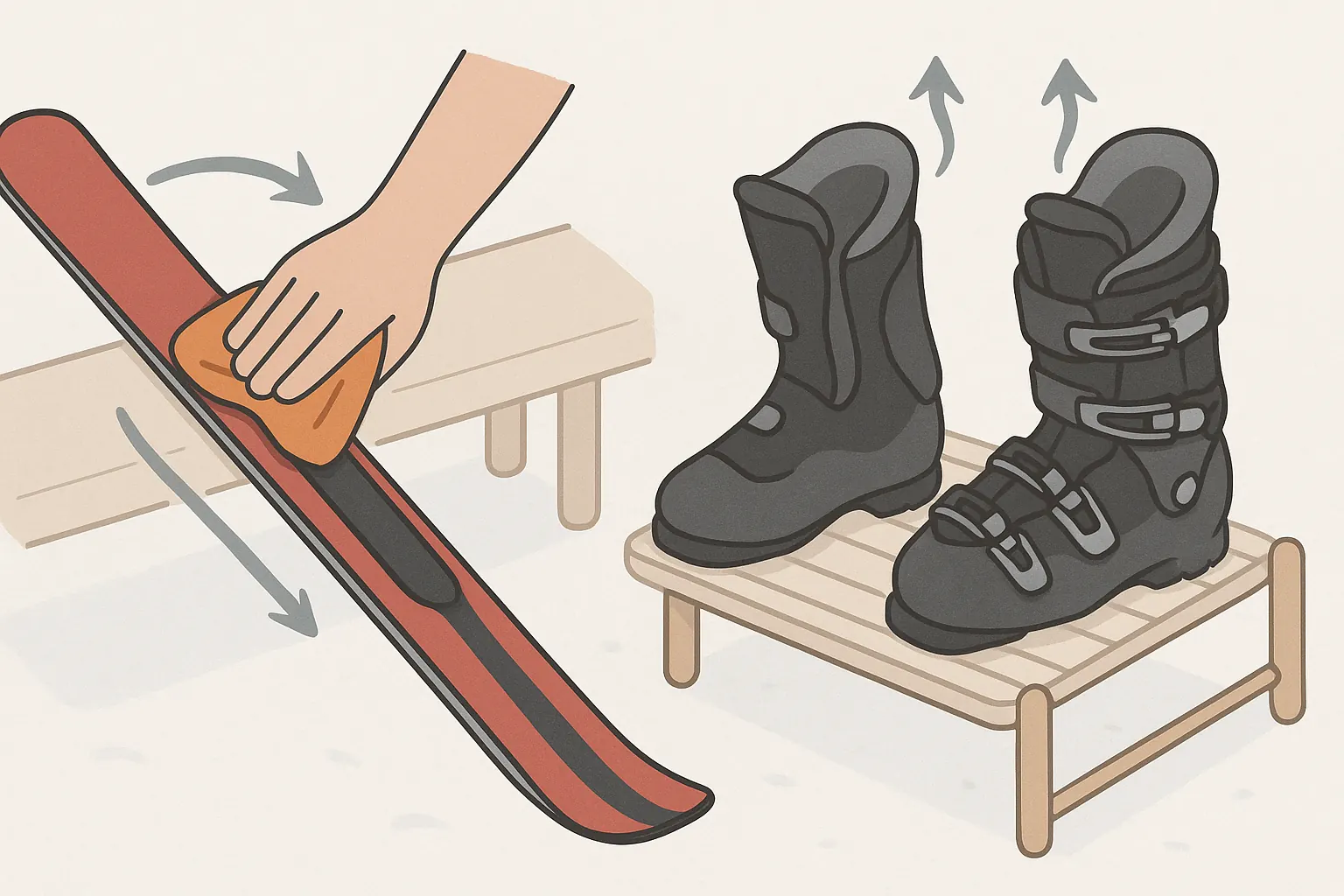
Remove snow and moisture from topsheets, bindings and edges. Pay special attention to edges to avoid rust.
-
Air-dry boots correctly
Take out liners/insoles, open buckles and dry at room temperature. No heaters. Lightly buckle afterwards to keep shape.
-
Pack and protect
Strap skis base-to-base. Keep boots open until fully dry, then lightly buckle. Store gear in a dry, ventilated spot.
-
Quick check & service plan
Inspect edges (nicks/rust), base (scratches) and bindings (ice/dirt). Note when to wax and touch up edges.
Typical Mistakes
- Leaving wet skis in the car overnight—edges rust fast.
- Drying boots on a radiator—warps plastic/liners.
- Over-tight buckling in storage—stresses buckles and shells.
- Walking on pavement unprotected—dulls edges and scuffs bases.
Beginner Questions
Do I remove insoles every time?
After wet days—yes. In dry conditions, air them out regularly. The key is fully dry boots by morning.
How do I deal with light edge rust?
Wipe immediately after skiing. For a thin film, a gummy stone is enough. Heavy rust—take it to a shop.
How often should I wax?
For beginners: every 3–5 ski days, or when bases look dry and feel slow. Regular wiping extends wax life.
Instructor’s Tip
“Set a 5-minute reminder when you get home. Less rust, less smell, more fun tomorrow.”
Conclusion
The wipe–dry–check habit preserves performance and comfort. Start today and save money and service time later.