Introduction
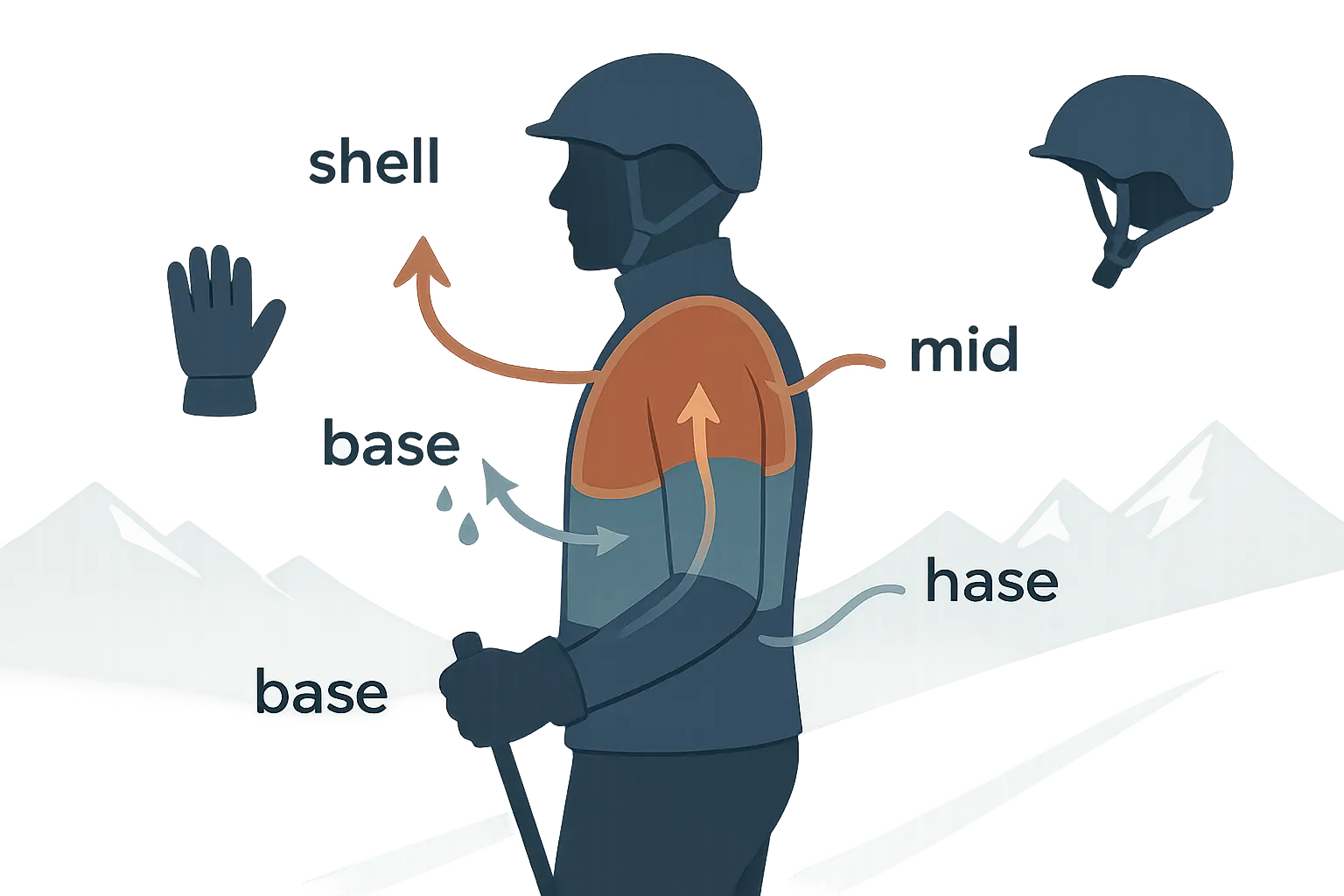
Layering keeps you warm and dry while letting you adapt fast. The base moves sweat away, the mid traps heat, the outer shell blocks wind and snow. Gloves protect hands, a helmet protects your head.
Steps (HowTo)
-
1) BASE: moisture-wicking next to skin
Choose synthetic or merino; snug but not tight. Avoid cotton—it holds moisture and chills you.
-
2) MID-LAYER: warmth without bulk
Fleece or light synthetic; in deep cold add a thin puffy. Aim for insulation with free movement.
-
3) OUTER SHELL: weather protection
Waterproof/breathable fabric with sealed cuffs and vents to dump heat quickly.
-
4) ACCESSORIES: gloves, helmet, socks
Warm mitts or gloves, thin balaclava/buff under the helmet. One medium sock is better than two pairs.
Typical Mistakes
- Cotton base layer—stores sweat and makes you cold.
- Too many layers—overheating then chilling during breaks.
- Gloves/socks too tight—cuts circulation, cold fingers and toes.
- No vents or poor adjustment—sweaty, then cold when resting.
Beginner Questions
Should I wear two pairs of socks?
No. One quality pair works best—drier feet, fewer pressure points, better warmth.
I get hot while skiing—what do I do?
Open vents and remove the mid-layer during breaks. Layering lets you adapt quickly to conditions.
Is a beanie under the helmet okay?
Use a thin balaclava or buff. Thick beanies compromise helmet fit and safety.
Instructor’s Tip
“Start slightly cool—after a minute of gliding you’ll be comfortable. If you’re warm before you start, you’re probably overdressed.”
Conclusion
Layering gives you control: stay dry, warm, and mobile. With gloves and a helmet you add comfort and safety from first lift to last run.