Introduction
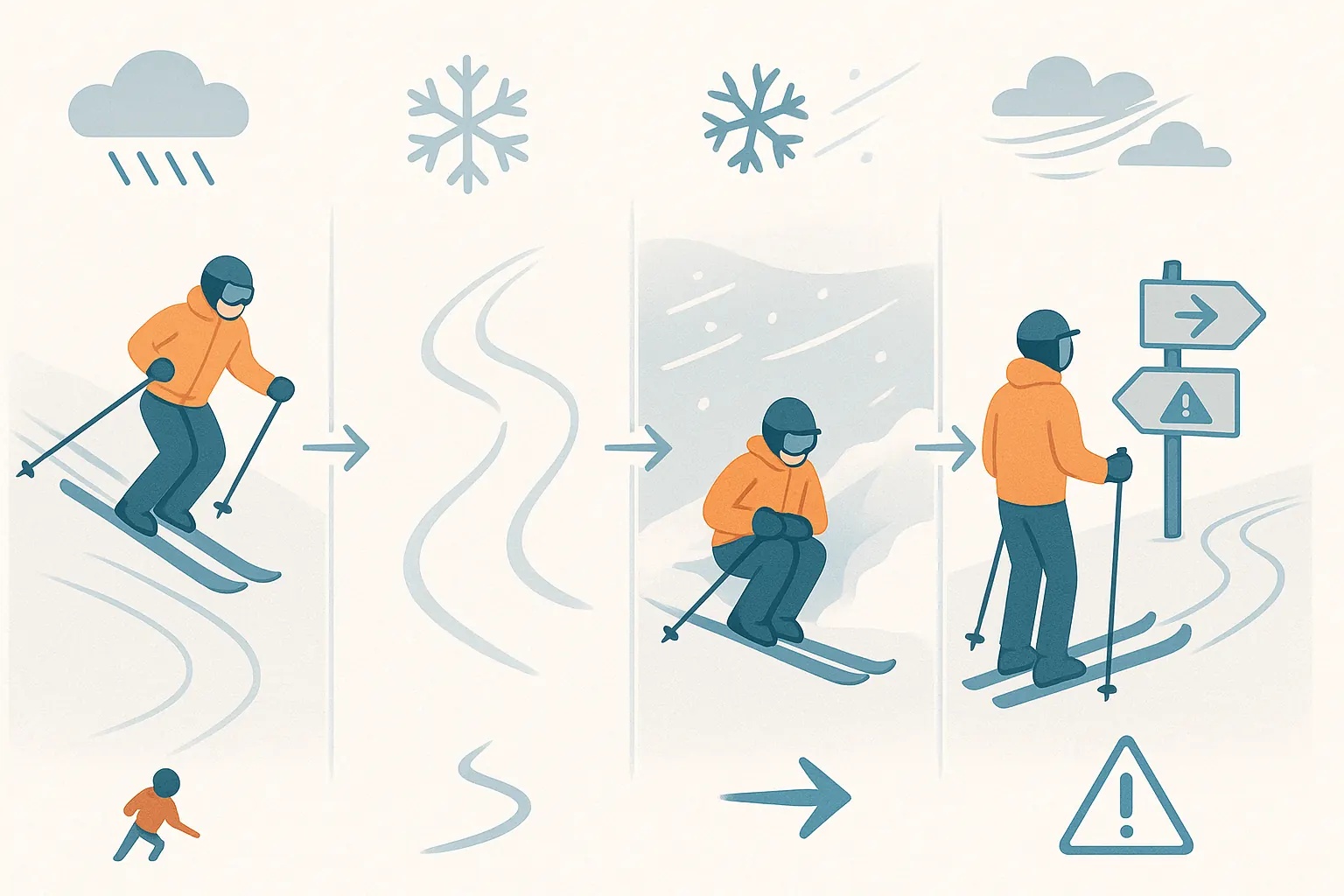
Conditions shift through the day: icy shadows, afternoon slush, patches of fog or gusty wind. Advanced skiers adapt technique, speed and terrain choice to remain predictable and safe.
Adaptation protocol
-
Scan and detect change
Look 2–3 turns ahead: snow color, reflections, other tracks, wind flags. Identify ice, slush, shadow patches or fog.
-
Tune speed and turn shape
On ice: quiet joints, longer arc. In slush: close the arc, stabilize the core. In fog: shorten rhythm and keep side references.
-
Choose safer micro-terrain
Seek textured, softer snow; avoid glassy plates and blind crests. In wind, favor sheltered aspects and wide exits.
-
Plan B: pause or change run
If visibility or surface drop below comfort, stop out of traffic, reset the plan and pick an easier or better-groomed run.
Typical mistakes
- Entering an icy plate with the same edge angle and speed as on soft snow.
- Over-pressuring tips in slush → sudden “digging”.
- Skiing in fog without side references and shorter rhythm.
- Ignoring wind and choosing exposed aspects without exit room.
Beginner questions
How do I read ice early?
Pale grey shine, mirror-like surface and a harder sound. It’s common in shadow – reduce edge angle before entering.
What helps most in fog?
Shorter rhythm, slower speed and side references (poles, piste edge). Keep movements soft and centered.
Instructor’s tip
“First spot the change, then change the technique. Rhythm, arc and micro-terrain are your three sliders.”
Conclusion
Timely detection and an adaptation plan protect energy and safety. When in doubt—slow down, widen arcs and pick an easier line.