Introduction
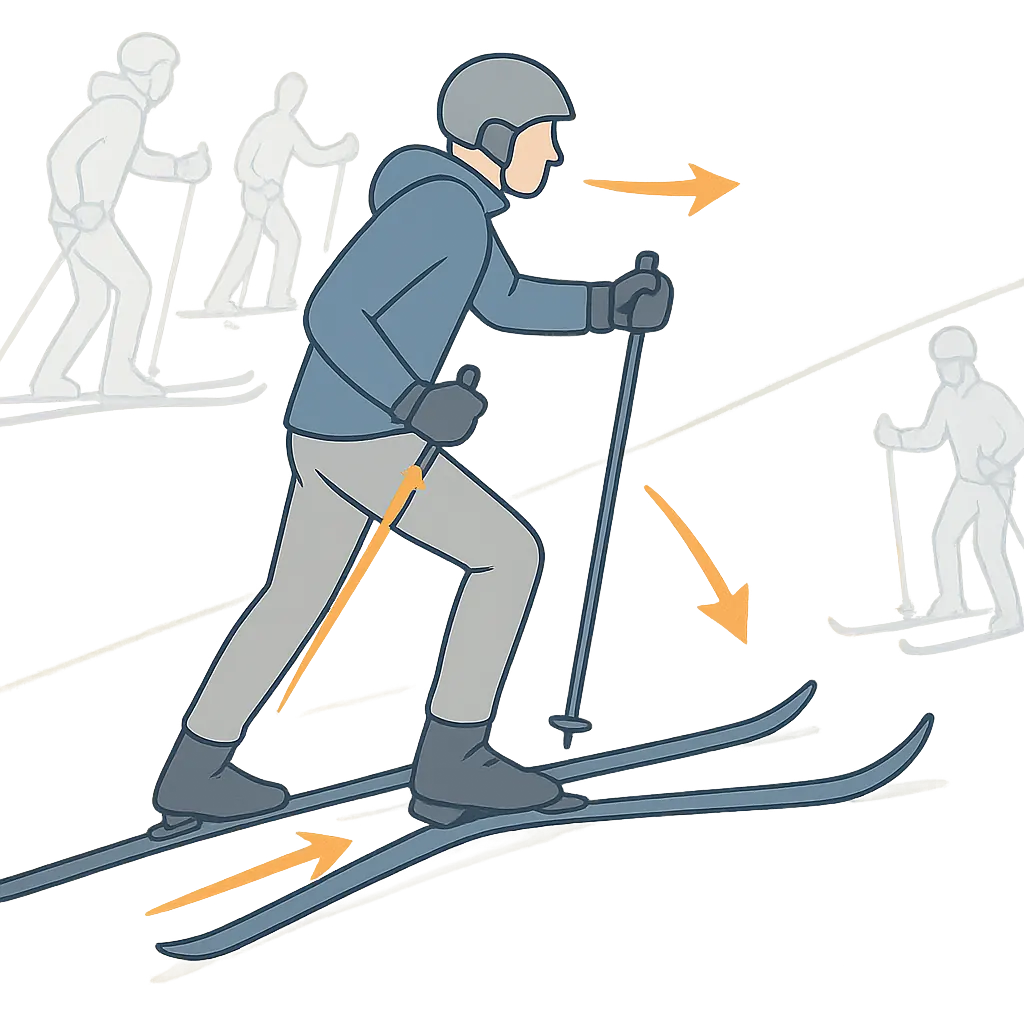
The herringbone is the simplest way to climb a gentle slope without sliding back. The keys are an open V-angle, active edges, and weight slightly forward with a sustainable rhythm. As it gets steeper, transition into a side-step and use an in-place step-turn when you need to change direction.
Steps
-
Set up: face uphill and choose your line
Check that the space is clear. Hips over skis, chest slightly forward, eyes uphill. Place skis under the body ready to open the tips.
-
Herringbone: ski angle and weight distribution
Open the tips into a V (≈20–30°). Press the inside edges to “bite” the snow. Keep weight over the balls of the feet; soft knees, torso slightly forward.
-
Rhythm and pole use
Alternate stepping with edge engagement. Poles provide light support (don’t pull). Breathe steadily and keep a short, repeatable rhythm.
-
Transition: side-stepping and in-place step-turn
When it steepens, turn to face across the hill and side-step with strong edges. To change direction, lift the downhill ski, then the uphill ski, rotating each into the new heading (step-turn).
Typical Mistakes
- V-angle too small (slipping) or too wide (instability and fatigue).
- Weight on the heels instead of forward — edges don’t hold.
- Crossing ski tips and tripping.
- Leaning on poles instead of driving with the legs.
Beginner Questions
I keep sliding backward — what should I change?
Increase the V-angle, load the inside edges, and move your weight slightly forward. Plant poles ahead as a light support if needed.
What’s the “right” ski angle?
On gentle slopes, start around 20–30°. If you slip, open a bit more; if you feel wobbly, narrow it and slow the rhythm.
When should I switch to side-stepping?
When the herringbone starts to feel too taxing or you slip despite edging — turn across the hill and side-step with short, secure moves.
Instructor’s Tip
“Eyes up, weight forward, edges working — poles only assist. Keep the rhythm short and repeatable, like a metronome.”
Conclusion
With the correct ski angle, active edges, and a calm rhythm, the herringbone becomes a reliable way to move uphill. When needed, switch to side-stepping and use a step-turn to change direction.