Introduction
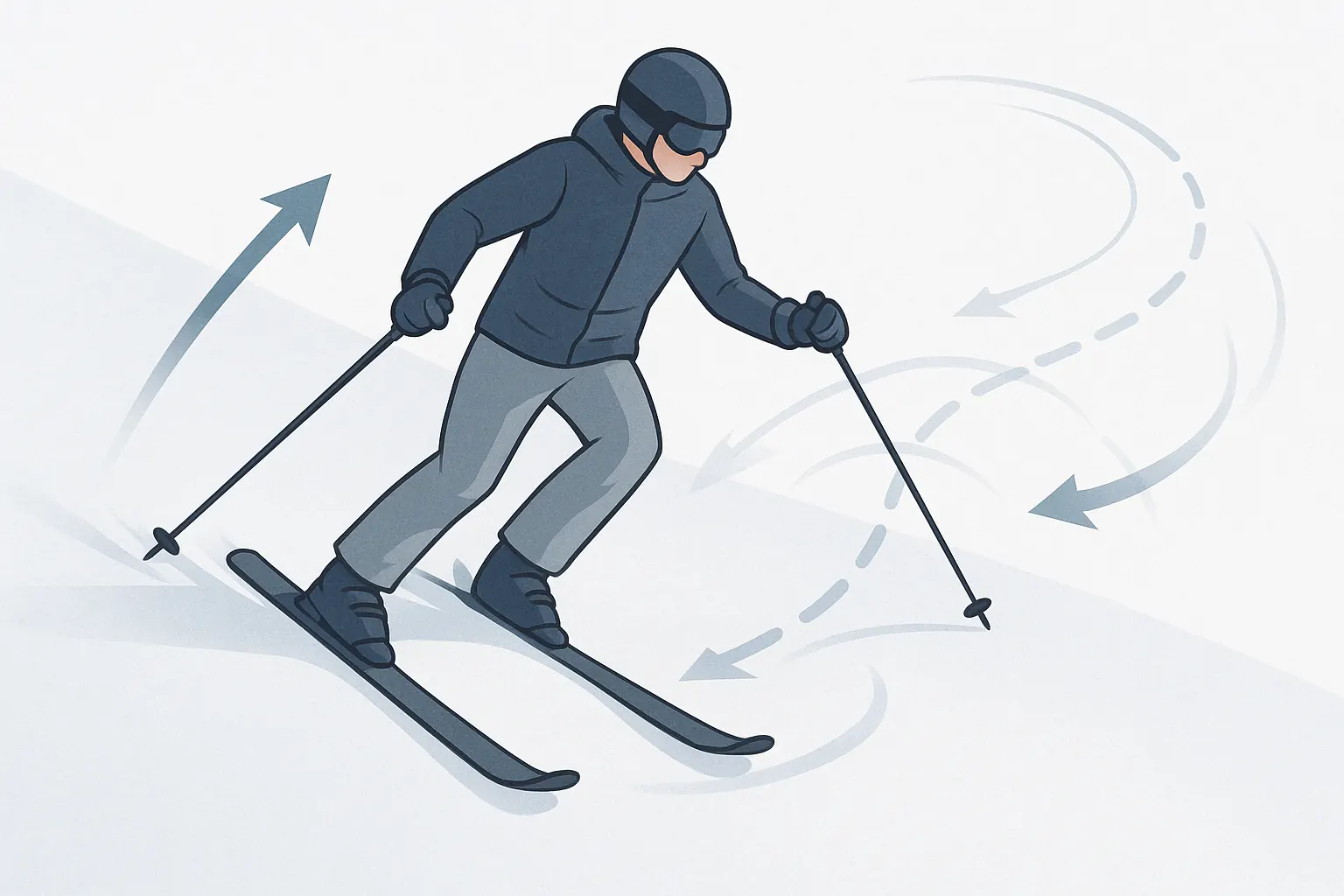
A traverse is a diagonal line across the slope on your uphill edges. It gives you speed control and space to change direction without panic. Here you’ll refine stance, edge dosing and simple garland transitions—short openings toward the fall line, then back into a calm traverse the other way.
Steps
-
Set up the traverse
Start from a stable stance (wedge or parallel). Square chest and hips across the hill, eyes 5–10 m ahead. Outside (downhill) hand slightly forward.
-
Edge and weight distribution
Tip the shins uphill to activate the uphill edges. Keep 60–70% of the weight on the downhill ski; soft knees and a touch of forward pressure.
-
Speed control
Dose the edge angle: increase to slow, slightly release to glide (“feathering”). If needed, blend in a mini-wedge, then return to a parallel traverse.
-
Change direction (garland)
Look to the new line. Soften edges, lighten and move pressure to the new downhill ski; open briefly toward the fall line, then close into the opposite traverse. Keep shoulders quiet—let the outside ski lead.
Typical Mistakes
- Flat skis (no edges) — acceleration downhill.
- Sitting back — loss of steering and unwanted slipping.
- Throwing shoulders/hips instead of guiding with the outside ski.
- Looking at skis instead of down the line.
Beginner Questions
Which ski carries more weight while traversing?
The downhill (outside) ski, about 60–70%. The uphill ski stays lighter and adds stability.
How do I slow down from a traverse?
Increase edge angle, point toes slightly uphill and stand a little taller at the knees. If needed, blend a mini-wedge briefly.
Is the garland safe for beginners?
Yes. It’s a controlled opening toward the fall line with edges still engaged, then a return to a stable traverse the other way.
Instructor’s Tip
“Control comes from your legs and edges—not from swinging your upper body. If you feel a pull downhill, add edge and move the hips a touch forward.”
Conclusion
With balanced pressure, active edges and calm transitions, traversing becomes your safe zone for changing direction and managing speed.