Introduction
Cold, dry air dehydrates you and skiing burns fuel. A planned sip-and-snack routine keeps focus sharp, reduces cramps and lowers late-day fall risk.
Explanation / Steps
-
Pack water and smart snacks
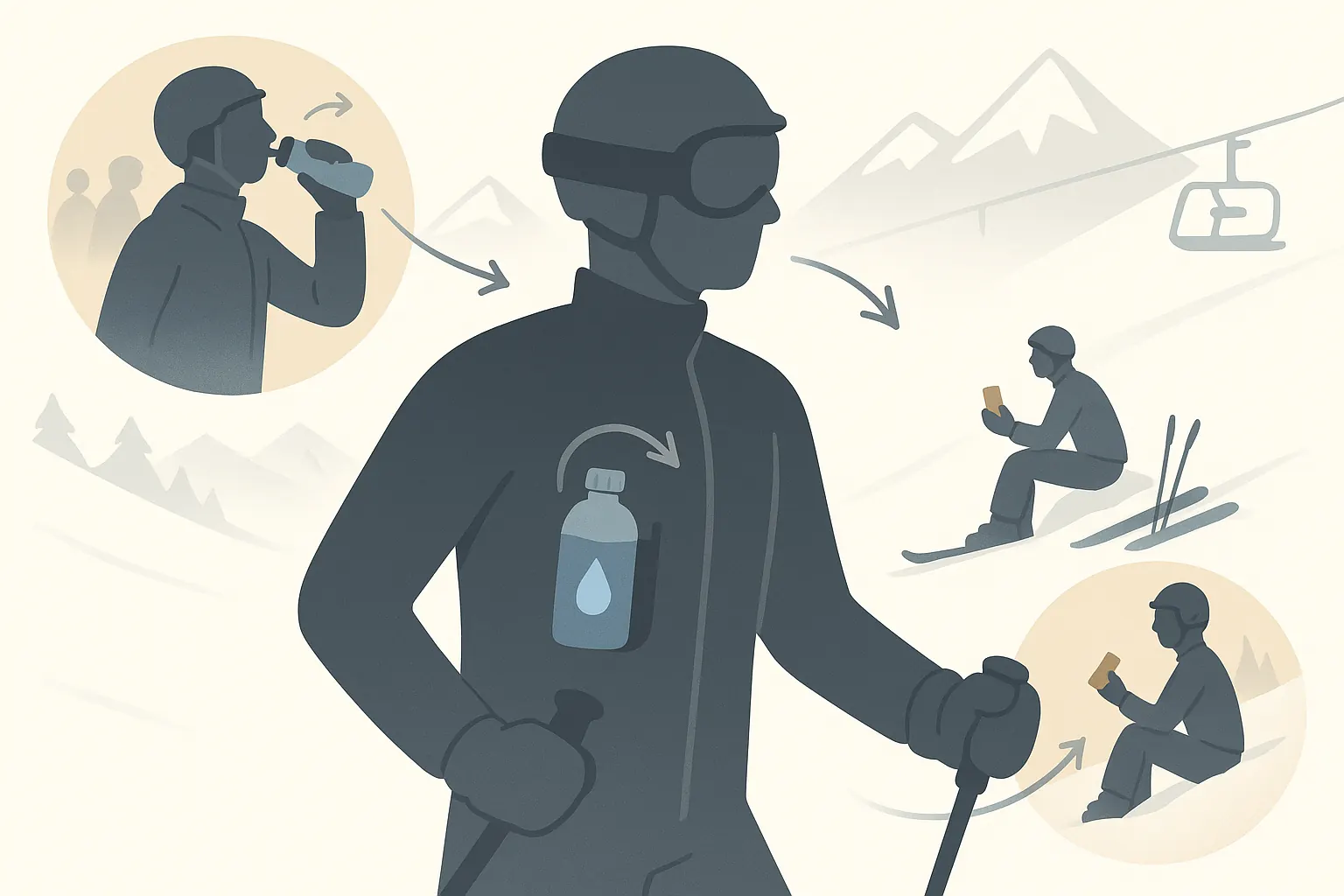
Carry 0.5–1 L (thermos or bladder) and 2–3 portions: nuts, bars, dried fruit or a small sandwich.
-
Sip with run rhythm
Take 3–4 sips at the bottom or before starting, roughly every 15–20 minutes.
-
Well-timed mini-break
Pull over to the side, eat 100–150 kcal, stretch calves and shoulders, resume once your heart rate settles.
-
Watch dehydration signs
Dark urine, headache, cramps and poor focus mean you should sip more and add a salty snack.
Typical Mistakes
- Waiting for thirst — a late sign of dehydration.
- Only sugary snacks with no protein or fat.
- Long gaps without sipping.
- Alcohol or too much coffee — dehydrating.
Beginner Questions
How much water should I carry?
For a half-day 0.5–1 L is usually enough; for a full day plan a refill or carry more.
What snacks work best?
Mix quick and sustained energy: nuts + dried fruit/bar; in winter, a small sandwich is practical.
Is hot chocolate okay?
Yes — as part of a break; still sip water regularly and don’t overdo sugar.
Instructor’s Tip
Keep the bottle in an inner pocket so it doesn’t freeze, and set a 20-minute reminder to prompt regular sips.
Conclusion
Plan your sips and small portions to ski longer and safer. A simple hydration and fueling routine keeps technique consistent to the last run.