Introduction
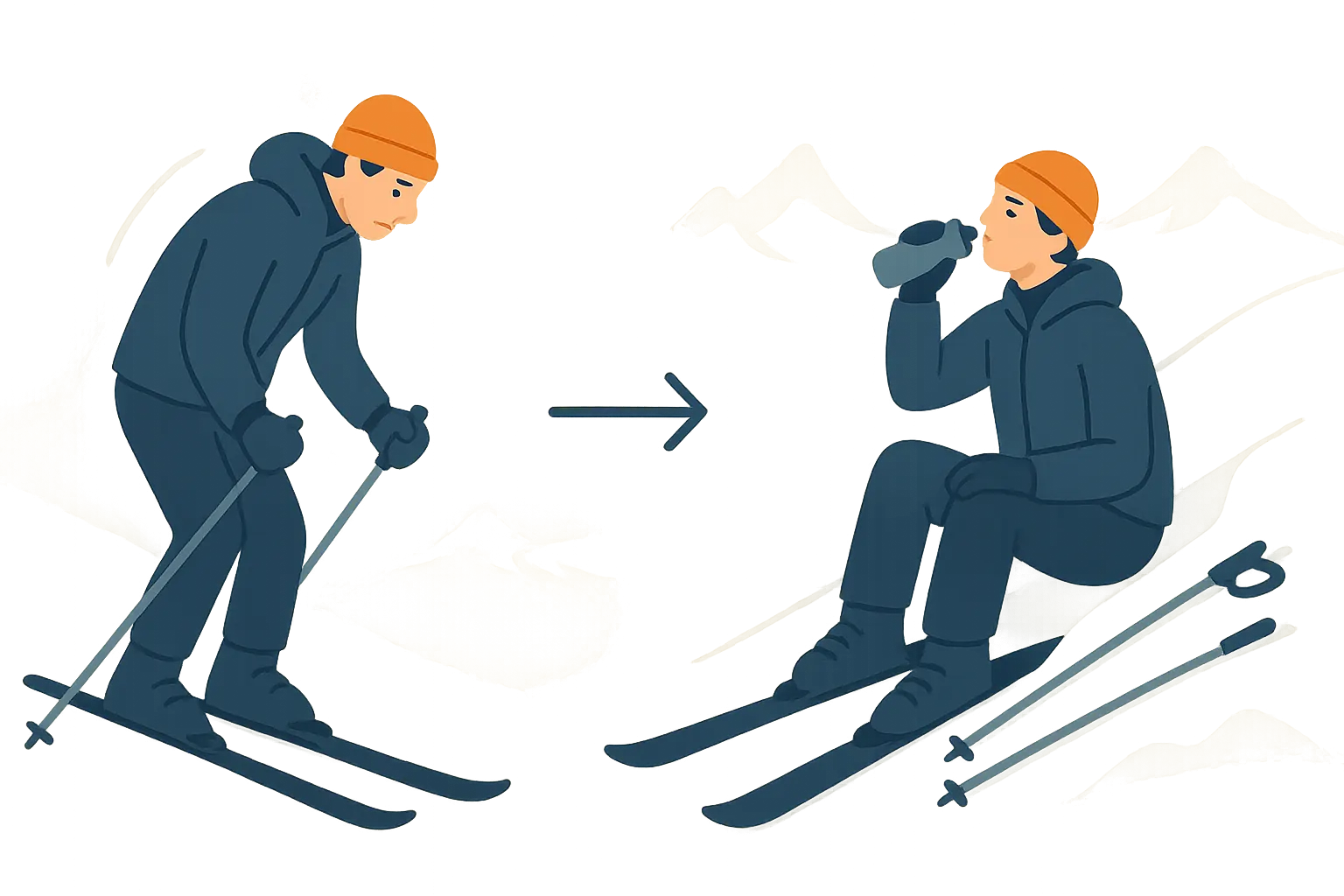
Fatigue reduces balance and reaction time. A brief check and a timely break keep the day safe and fun.
Steps (HowTo)
-
Quick body scan on the run
Heavy legs, late reactions, tight shoulders or poor focus mean it’s time to stop.
-
Pull over to a safe, visible spot
Stop on the side where you’re visible. Avoid blind crests and narrow sections.
-
Micro-reset: water + small snack
A few sips of water and a bite; loosen boot buckles, shake your legs, breathe out slowly.
-
Test run or call it a day
After the break, check stability. If fatigue returns quickly—finish for the day.
Typical Mistakes
- “One more run” while ignoring fatigue signals.
- Stopping in blind zones or in the middle of the slope.
- Relying on coffee only—no water or snack.
Beginner Questions
How often should I take a break?
Every 2–3 runs or as soon as you notice focus or balance dropping.
Where is it safest to stop?
On the slope’s edge in a visible area—never right below a crest or in a bottleneck.
What if I get cold during the break?
Add a layer, wiggle toes and calves, choose a warm drink—but keep hydrating.
Instructor’s Tip
“The best time for a break is before you desperately need it.”
Conclusion
Early checks and short breaks extend the good part of the day and make your skiing safer.