Introduction
Side slipping lets you descend small sections safely when space is tight or the slope is steeper. The core is gentle edge release with a stable, centered stance.
Steps
-
Setup and edges
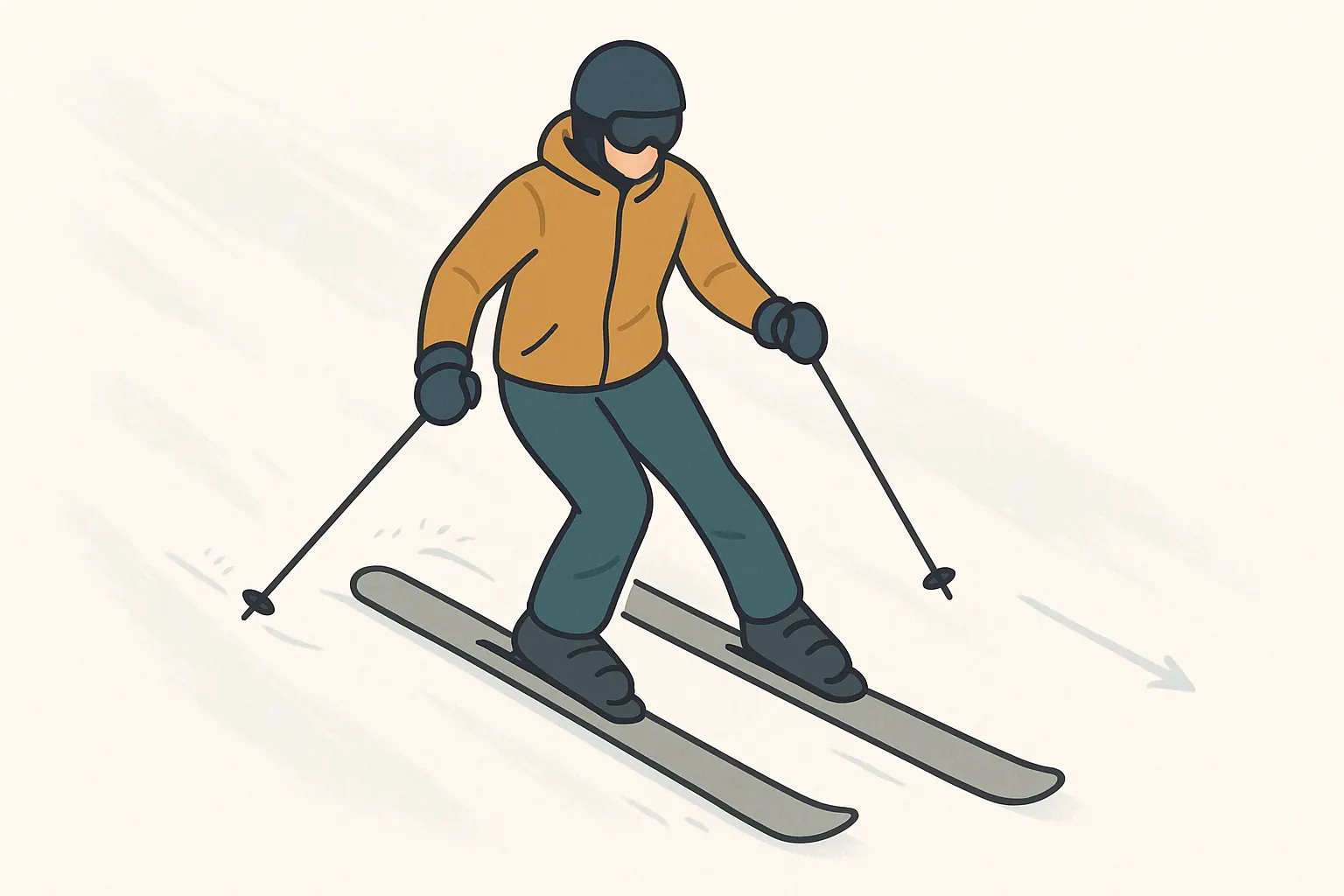
Stand across the fall line. Soft knees, hips above feet. Lightly engage the uphill edge to keep skis still.
-
Start the slip
Gradually release the edges by rolling ankles/knees. Skis begin to move without turning.
-
Control speed
Feather edges with micro-adjustments: more edge = slower; less edge = faster. Keep eyes down the hill.
-
Stop and reset
Increase uphill edge angle smoothly until skis grip and stop. Breathe, reset stance, repeat.
Typical Mistakes
- Releasing edges too much → sudden acceleration.
- Rigid upper body → choppy, uncontrolled slide.
- Heels weighted → shovel loses contact.
- Looking at skis instead of down the hill.
Beginner Questions
What slope should I use?
Start on a gentle pitch, then progress to steeper terrain.
Where do the poles go?
Hands slightly forward for balance; poles are not brakes.
Should I brake with my heels?
No. Control comes from edge angle, not scraping with heels.
Instructor’s Tip
“Think feather, not force. Tiny ankle/knee rolls are your throttle and brake.”
Conclusion
Mastering side slip makes tight transitions safe and predictable. It’s a foundation for short turns and steeps.