Introduction
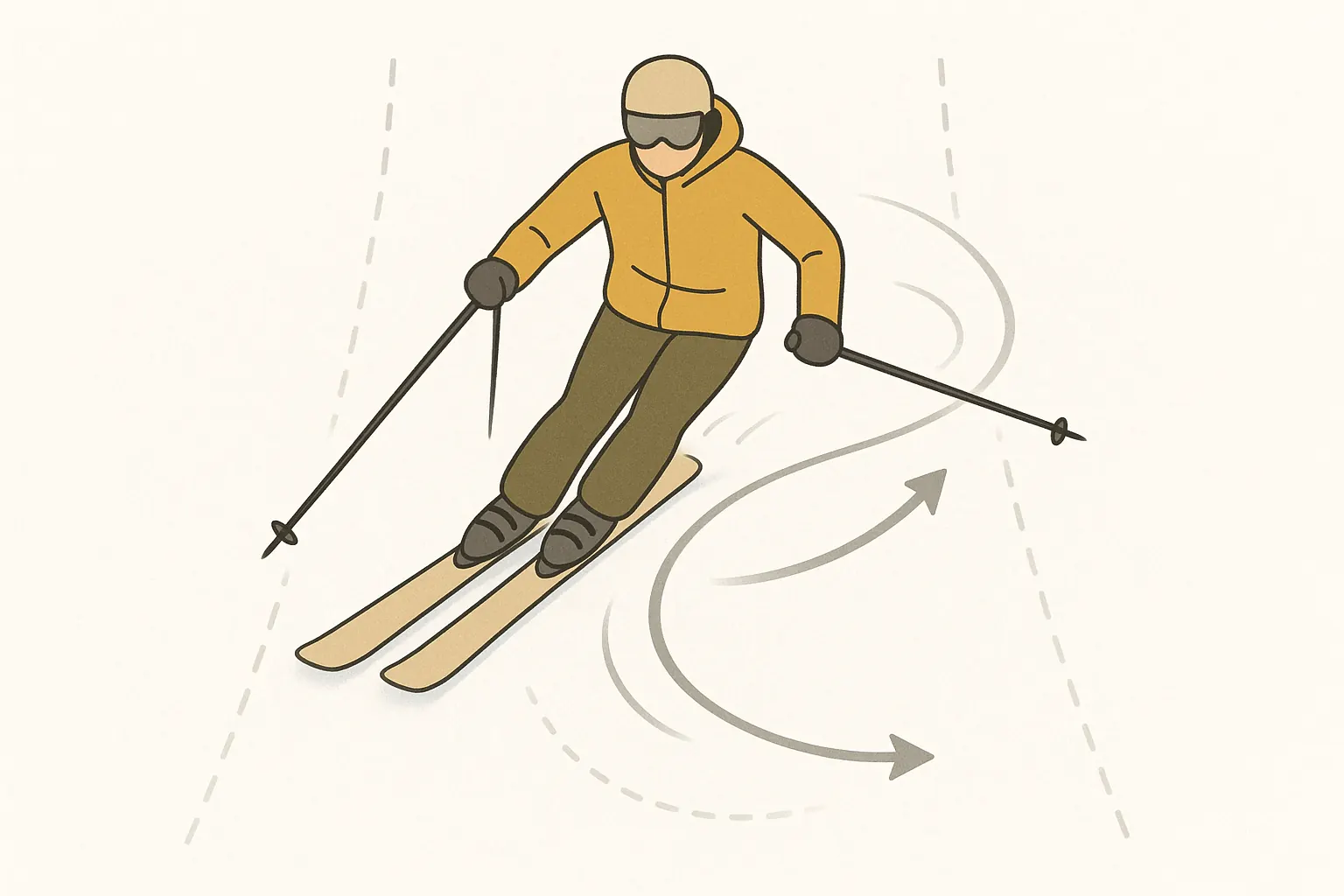
Short turns keep you in control on steeper or crowded sections. The sequence is pole plant → edge release → weight to new outside ski, while the upper body faces downhill.
Steps
-
Set the corridor
Imagine a shoulder-wide lane. Quiet torso, soft knees, eyes downhill, slight pressure on the outside ski.
-
Pole plant & initiation
A quick plant in front of your feet cues the new turn. Gently release edges on the old outside ski.
-
Move to the new outside
As skis flatten, flow to the new outside ski and build edge angle. Hips stay over the feet.
-
Maintain rhythm
Keep an even “ta-ta-ta” tempo. More edge = slower; less edge = faster. Avoid upper-body rotation.
Typical Mistakes
- Late pole plant → broken rhythm.
- Over-rotating shoulders → skid tails instead of steering.
- Weight stuck on the inside ski.
- Braking with heels instead of using edges.
FAQ
Where should I practice?
Start on gentle to medium pitches with smooth snow, then progress to steeper, bumpier terrain.
How strong should the pole plant be?
Short and precise — more cue than support. If the pole flies back, it was too strong.
How do I keep the lane narrow?
Keep the torso quiet and transition by releasing edges rather than throwing the tails.
Instructor’s Tip
“Plant – release – move. If rhythm falls apart, stop, reset, and nail the next three turns perfectly.”
Conclusion
Combine timely pole plants with gentle edge work and you’ll get stable, efficient short turns — the gateway to steeps and traffic.