Introduction
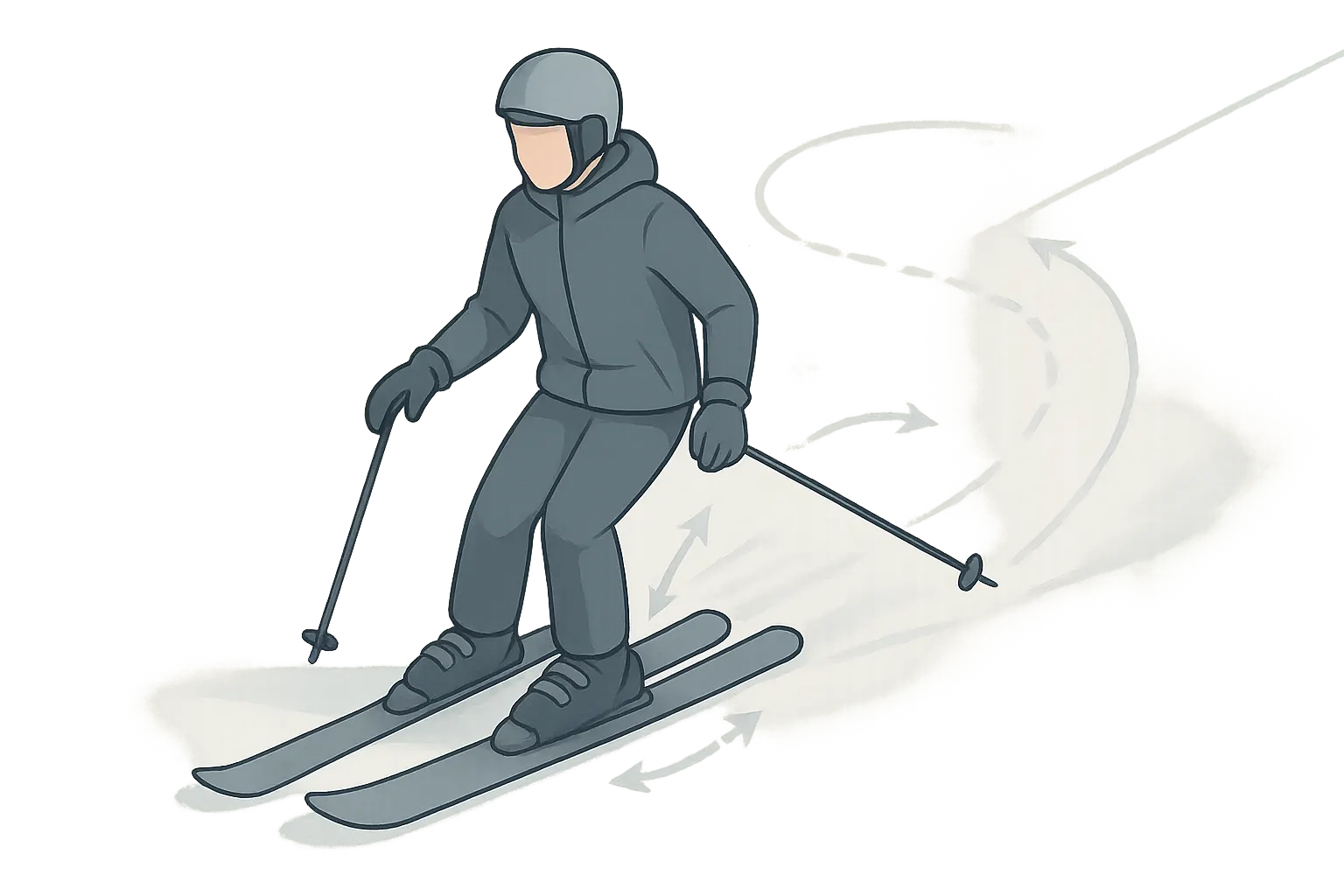
The side-slip is a foundation of speed control on steeper pitches and in narrow corridors. The idea is to gradually soften your edges via ankle and knee tipping until the skis start sliding sideways, then re-engage to slow or stop whenever you want.
Steps
-
Set across the hill
Stand across the slope, skis parallel. Weight balanced, hips over feet, hands forward, eyes 5–10 m downhill.
-
Release the edge (start sliding)
With micro ankle/knee movements, reduce edge angle toward flat until they release. Keep shoulders quiet; the slide begins gently.
-
Modulate speed & stop
To slow, increase edge angle and let the edges bite. To glide, soften them slightly. Breathe steadily and keep light forward pressure.
-
Falling-leaf variation
Slide a few meters, then subtly move feet/knees to glide a little forward and back, keeping consistent edge control throughout.
Typical Mistakes
- Skis too flat — accelerate downhill.
- Leaning back — tips wander and control drops.
- Twisting shoulders instead of using ankle/knee tipping.
- Over-gripping edges — sticky start and jerky motion.
Beginner Questions
I’m afraid I’ll pick up speed — how do I stay in control?
Start with a tiny release and re-engage quickly. Hands forward and light forward pressure keep skis composed.
What should I do with my hands and poles?
Poles stay slightly ahead and out to the sides for balance—don’t lean on them. Upper body stays calm while the legs fine-tune edges.
How do I stop from a side-slip?
Gradually increase edge angle to arrest the slide; if needed, steer tips slightly uphill for a full stop.
Instructor’s Tip
“Think volume knob, not on/off switch. Adjust edges smoothly from the ankles. Inhale, exhale, then make a small edge change.”
Conclusion
Side-slipping teaches precision edge work. Once you own it, you’re ready for steeper terrain and more exact direction changes.