Introduction
The right ski transforms grip and fatigue. Link waist width, length, rocker/camber, flex and sidecut to the day’s snow.
Steps
-
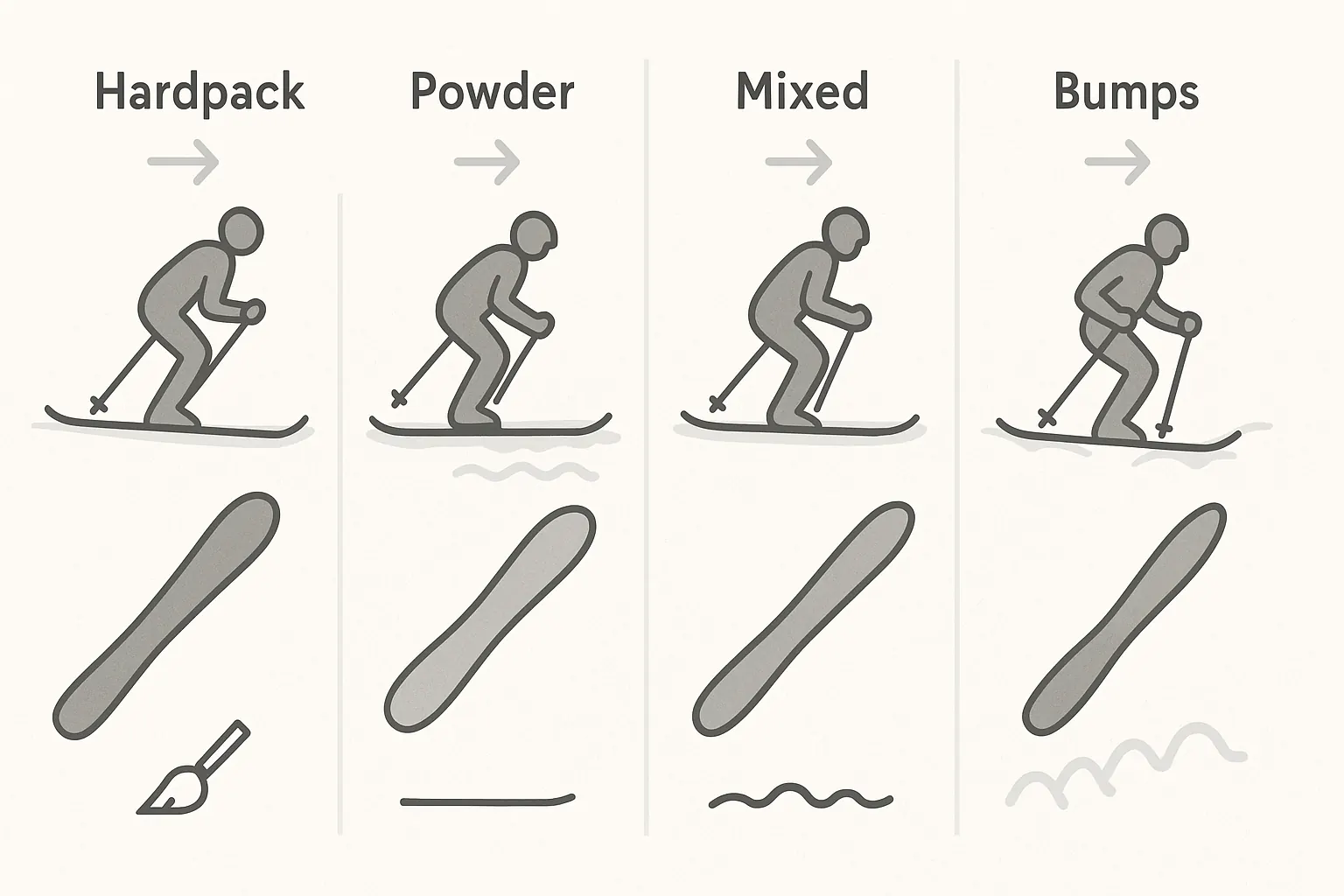
Ice / hardpack
Narrower waist (65–85 mm), pronounced camber, strong torsion, sharp edges. Length ≈ body height to +0–5 cm.
-
Powder / deep snow
Wide waist (95–115+ mm), rockered tip/tail, softer flex zones for float. Length height +5–10 cm.
-
Mixed snow – all-mountain
Mid-waist (85–100 mm), camber underfoot with moderate rocker. Versatile 14–18 m radius.
-
Bumps / trees
Slightly shorter, a touch softer for quick flex and short arcs. Waist 80–95 mm; stable camber for precision.
Typical Mistakes
- Too-wide skis on ice—slow edge-to-edge response.
- Too-short powder skis—tip dive and extra effort.
- Ignoring flex—too soft on fast hardpack, too stiff in bumps.
- Wrong wax/tune for snow temperature.
Beginner Questions
Do all-mountain skis cover everything?
Great for “a bit of everything,” but extreme ice and very deep powder are better with specialized skis.
How do I pick length?
Hardpack: around height to +0–5 cm; Powder: height +5–10 cm; Trees/bumps: nearer height or −5 cm for agility.
What about radius and flex?
Smaller radius/softer flex = shorter turns and easier initiation; larger radius/stiffer flex = stability at speed.
Instructor’s Tip
“Look at the snow before the model: conditions dictate width, profile and length—the model comes second.”
Conclusion
When ski type matches the conditions you gain grip, save energy and ski with safer rhythm—whatever the day brings.