Introduction
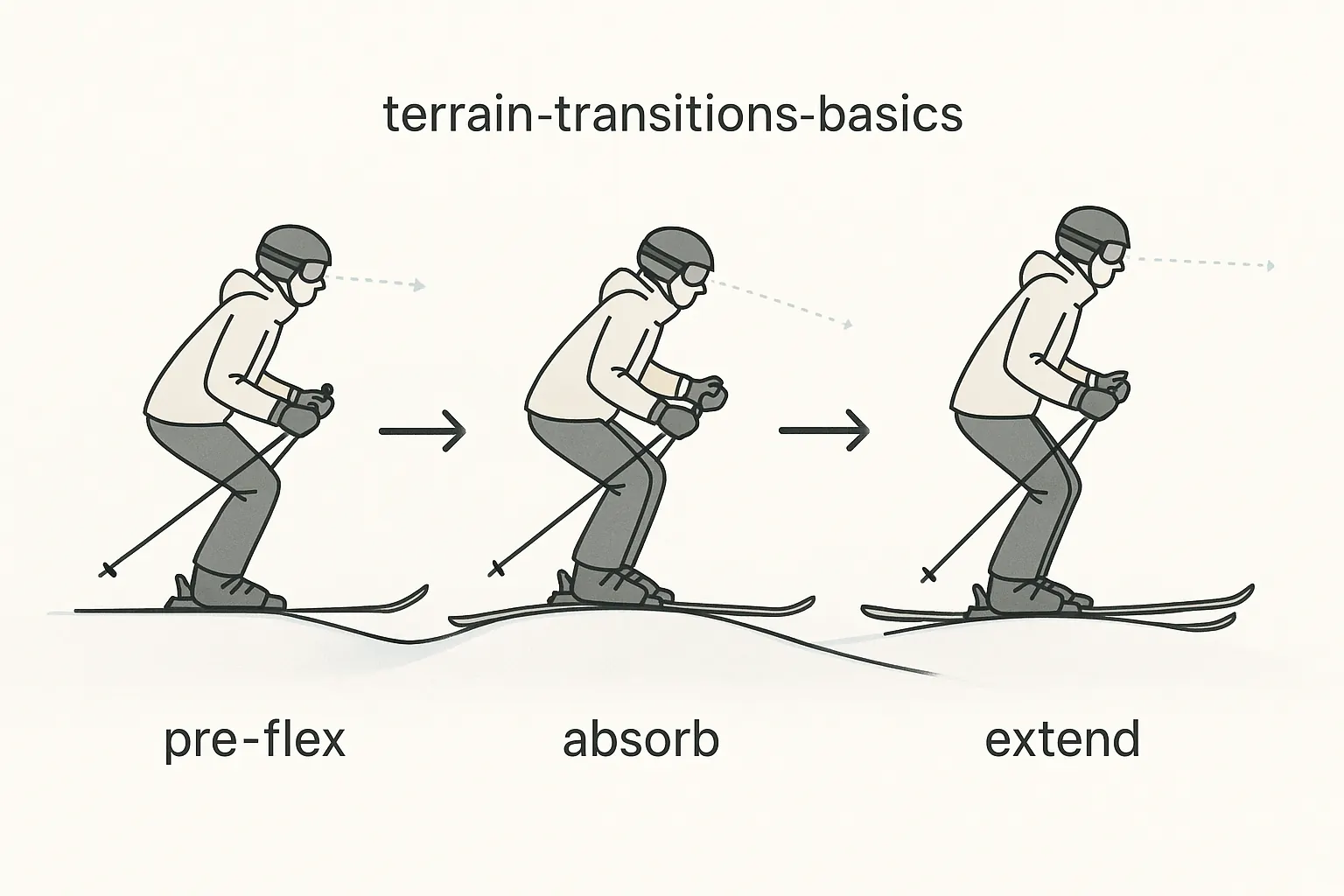
Transitions over rollovers and waves require proactive legs: pre-flex before the crest, absorb over the feature, and extend after, while staying centered and looking ahead.
Steps
-
Scan and set stance
Look 2–3 ski lengths ahead. Quiet torso, soft knees, weight centered. Adjust speed before the transition.
-
Pre-flex
Just before the crest lower by flexing ankles/knees/hips to create room to absorb terrain. Maintain ski–snow contact.
-
Absorb over the feature
As you pass the rollover, actively absorb with legs while the torso stays steady and facing downhill.
-
Extend and re-center
After the feature, smoothly extend to re-center over the feet. Add gentle edge angle to stabilize direction and speed.
Typical Mistakes
- Reacting late (flexing on the crest) → ski–snow disconnect and bounce.
- Rigid torso → impacts pass to knees/back.
- Eyes on skis instead of ahead.
- Hard heel braking after the feature instead of edging.
Beginner Questions
Should I jump over rollovers?
No. Aim for continuous contact with the snow: absorb and extend rather than jump.
What if the snow is choppy?
Look further ahead and soften with the knees. Smaller turns and a quiet torso maintain stability.
How do I hold direction after?
Re-center and gradually add edge angle on the outside ski to “catch” direction without heel braking.
Instructor’s Tip
“Think: lower – absorb – extend. If a feature surprises you, fix the next one with earlier flexion and a longer look-ahead.”
Conclusion
Proactive leg work keeps transitions smooth and safe. This skill links short turns to confident skiing in variable terrain.