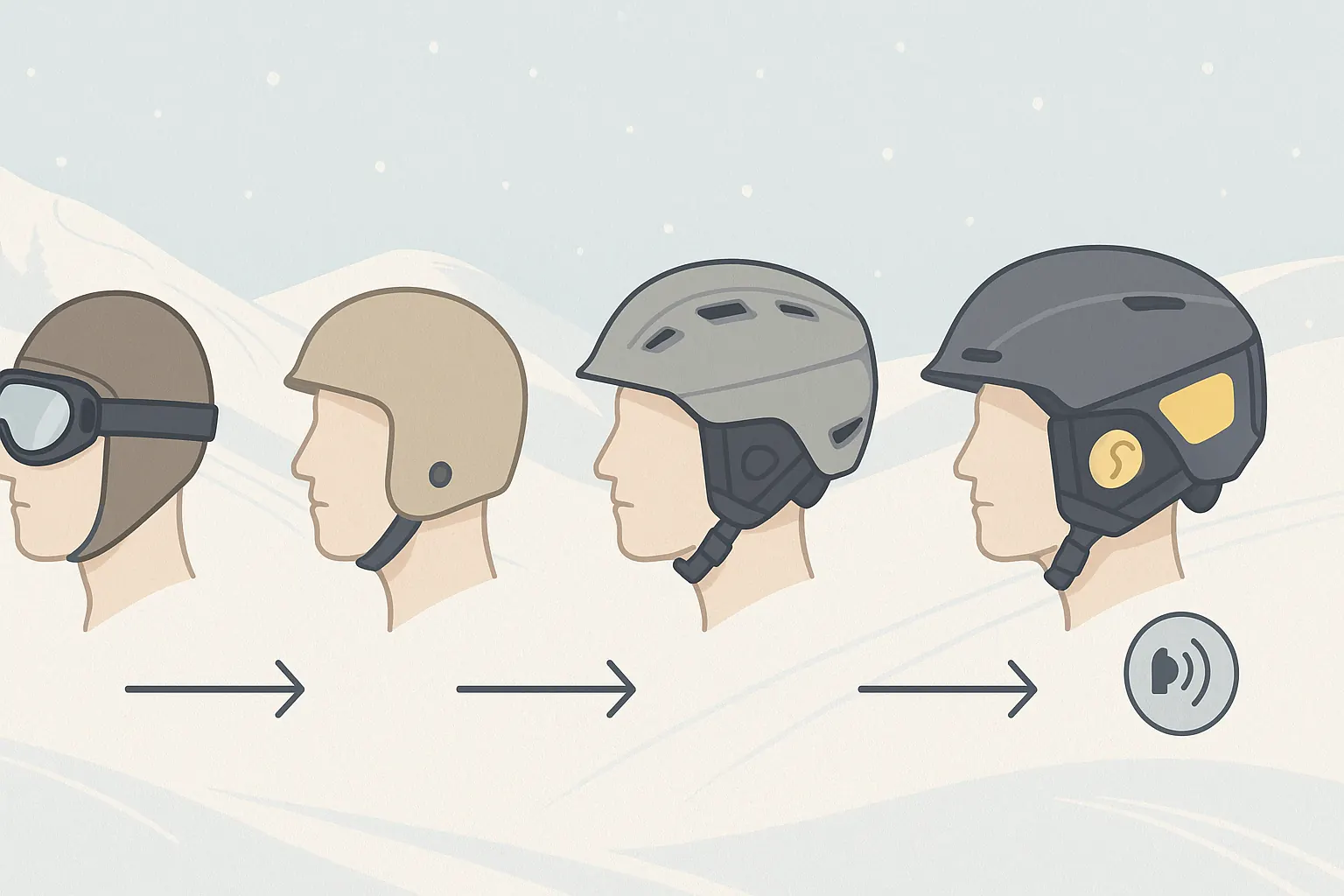
From steel and felt to EPS foam
- Before 1950: caps and hard shells borrowed from motor sports were common.
- 1950–1990: thermoplastics and EPS foam arrive—mass and ventilation become key.
- 1990–2010: lightweight composites, in-mold construction, improved aerodynamics and goggle integration.
- After 2010: rotational systems (e.g., MIPS), multi-density foams, impact sensors and Bluetooth features.
Rotational protection and “smart” features
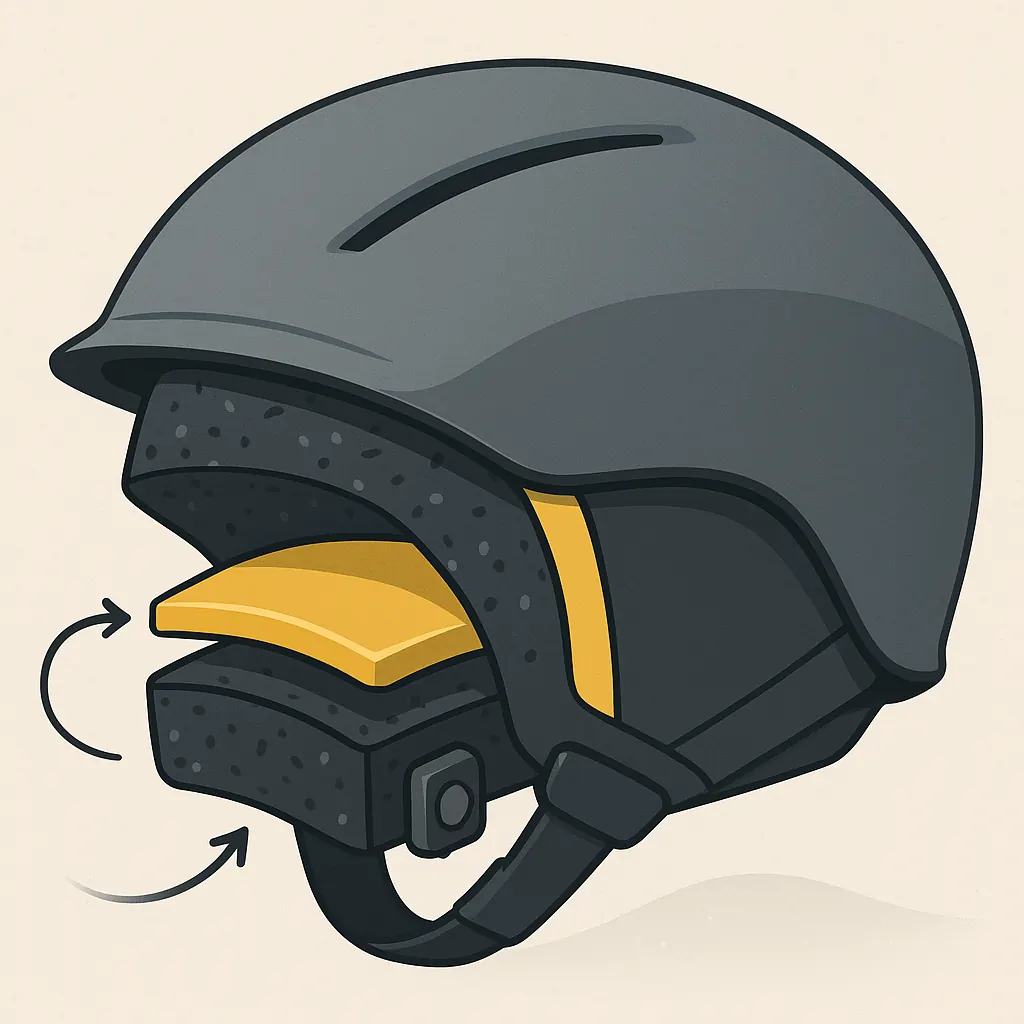
Serious head injuries often involve both linear and rotational accelerations. Systems like MIPS add a low-friction slip layer inside the helmet to reduce rotational loads during oblique impacts. Modern models also integrate sensors that capture acceleration/rotation and can notify apps or contacts after a significant event.
How to choose: fit, standards, and care
- Fit & stability: snug but comfortable; Y-straps align at the ear.
- Standards: look for EN1077 (alpine) and any rotational protection markings.
- Care: replace after a major impact; air-dry; avoid solvents.
Fun fact: the slip-layer concept was adapted from cycling injury research and quickly found its place in snow sports.