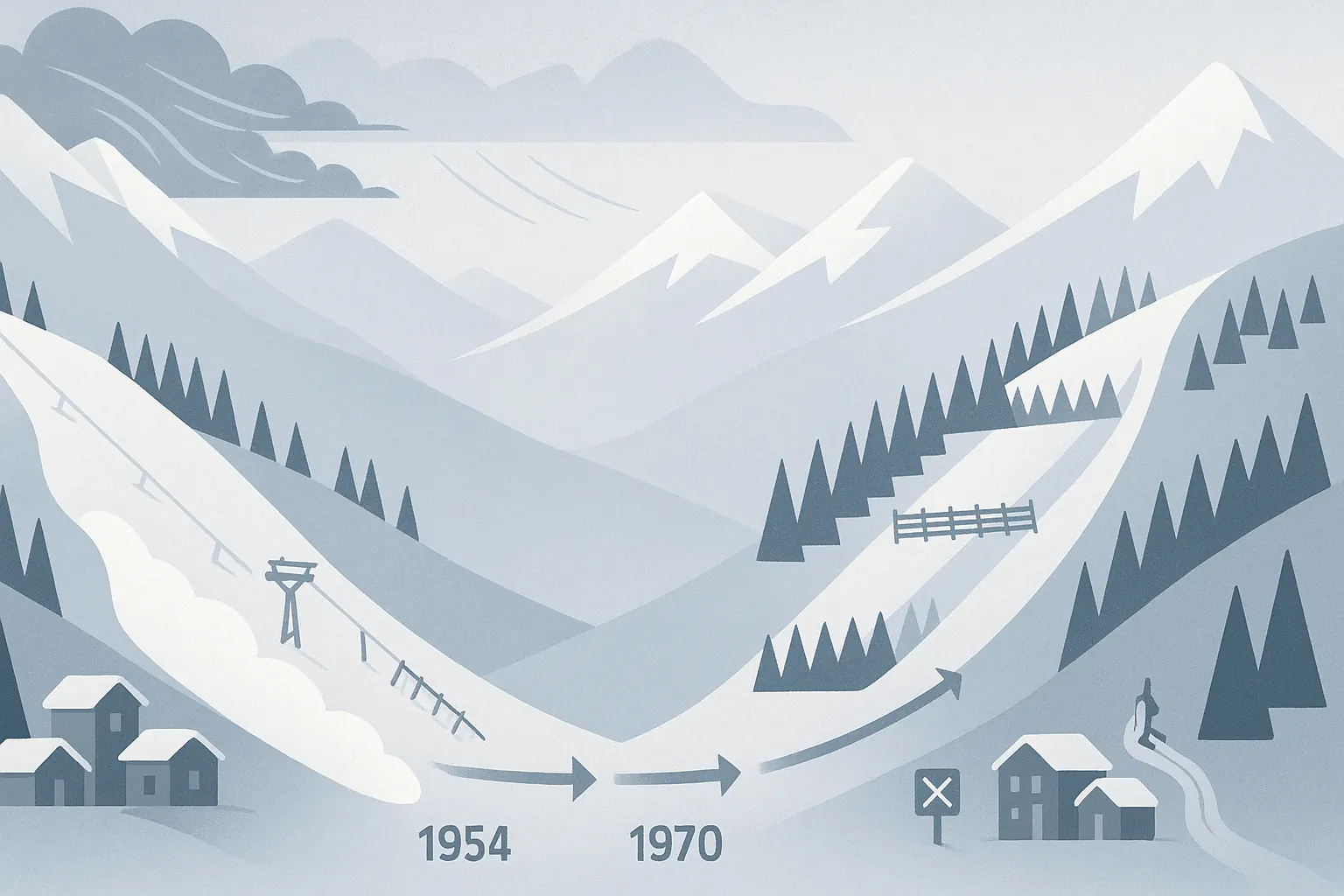
Blons, Austria (1954): twin slides and settlement lessons
In January 1954, two major avalanches struck villages in the Großes Walsertal. Blons suffered the heaviest toll, prompting a rethink of settlement placement, forest belts and early-warning practices.
- Accelerated protective forestry and engineered barriers.
- Spurred organized regional avalanche monitoring.
Val d’Isère, France (1970): the power of “exceptional” conditions
An avalanche impacted a building near the village during unstable-snow weather. The aftermath included stricter temporary closures and stronger protection standards for resort infrastructure.
Galtür, Austria (1999): modern forecasting and risk management
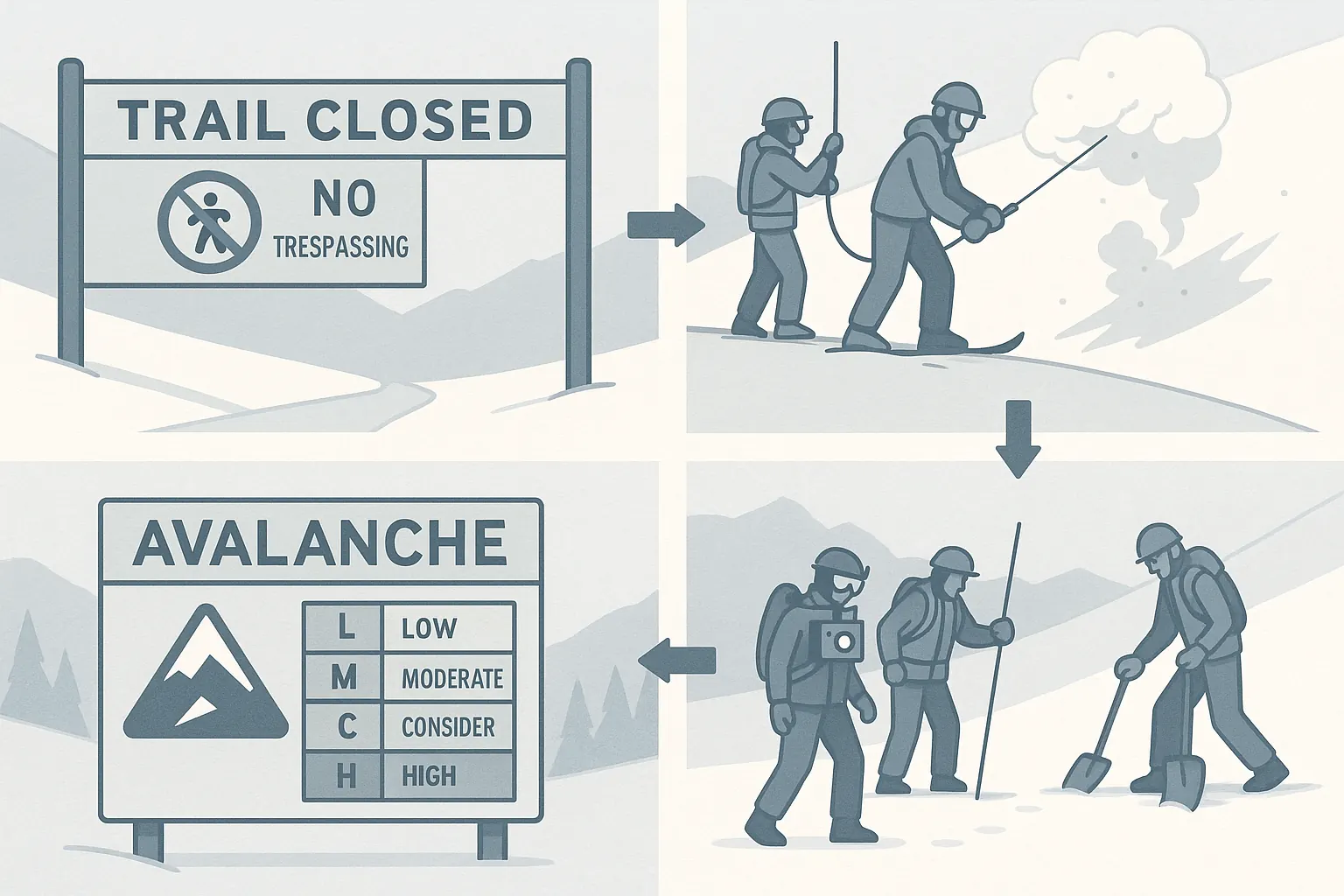
The Paznaun valley tragedy underscored that even modern systems have limits. The response modernized avalanche bulletins, expanded fencing and standardized rescue-team training.
Fun fact: After 1999, many resorts adopted public, icon-based danger scales — a simple change that boosted visitor awareness.
Key takeaways for resorts and visitors
- Terrain planning: Protective belts and smart trail design.
- Dynamic closures: Rapid responses to weather/snow shifts.
- Clear information: Transparent bulletins and signage.
- Training & kit: Regular drills; beacon, probe, shovel off-piste.