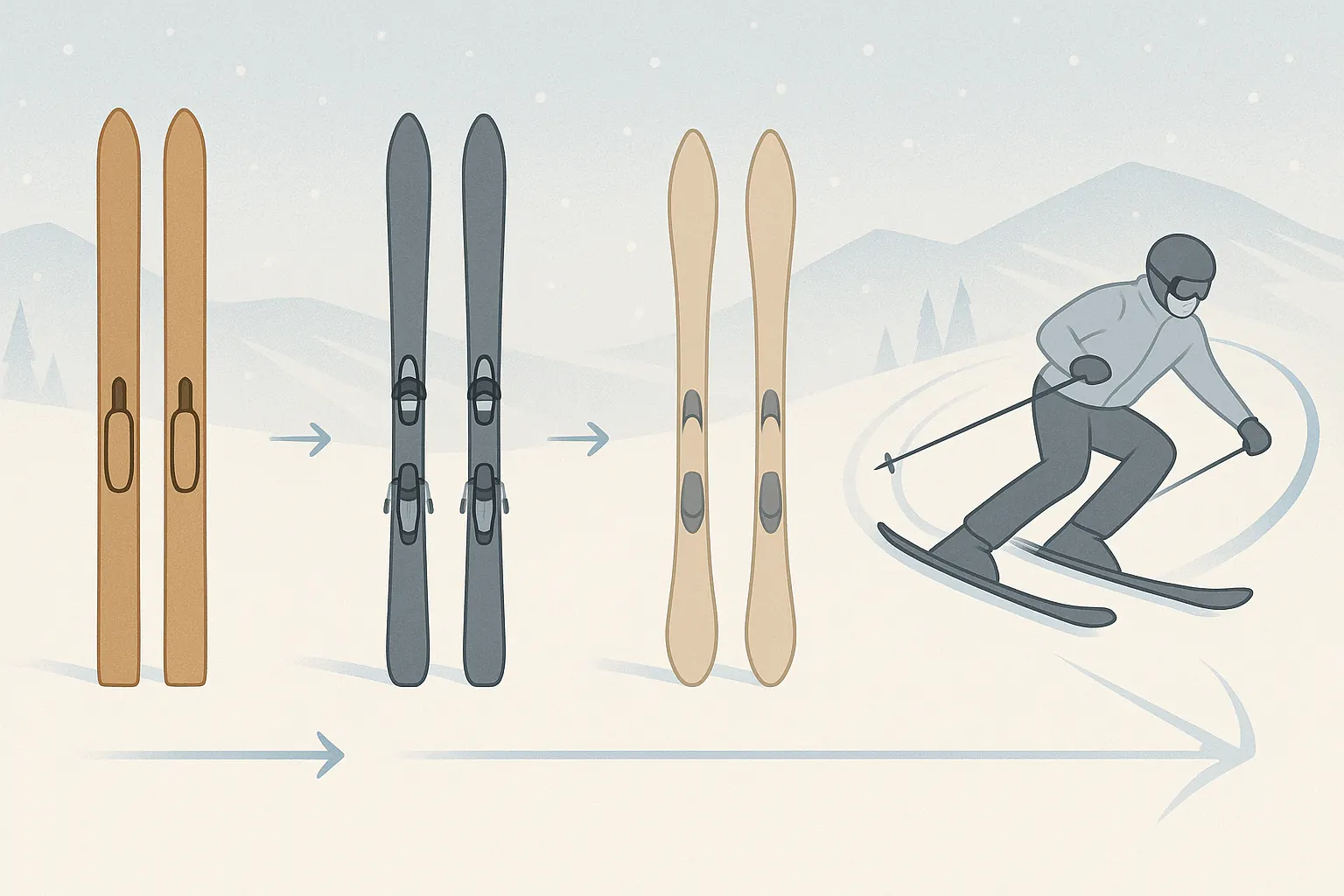
Early experiments and the birth of the concept
The idea of a curved ski wasn’t new — prototypes appeared as early as the 1970s, but stability and materials limited their use. The real breakthrough came in 1991 when Elan introduced the SCX — the first commercial carving ski, shorter, wider, and radically curved compared to the long straight classics.
A technical revolution on snow
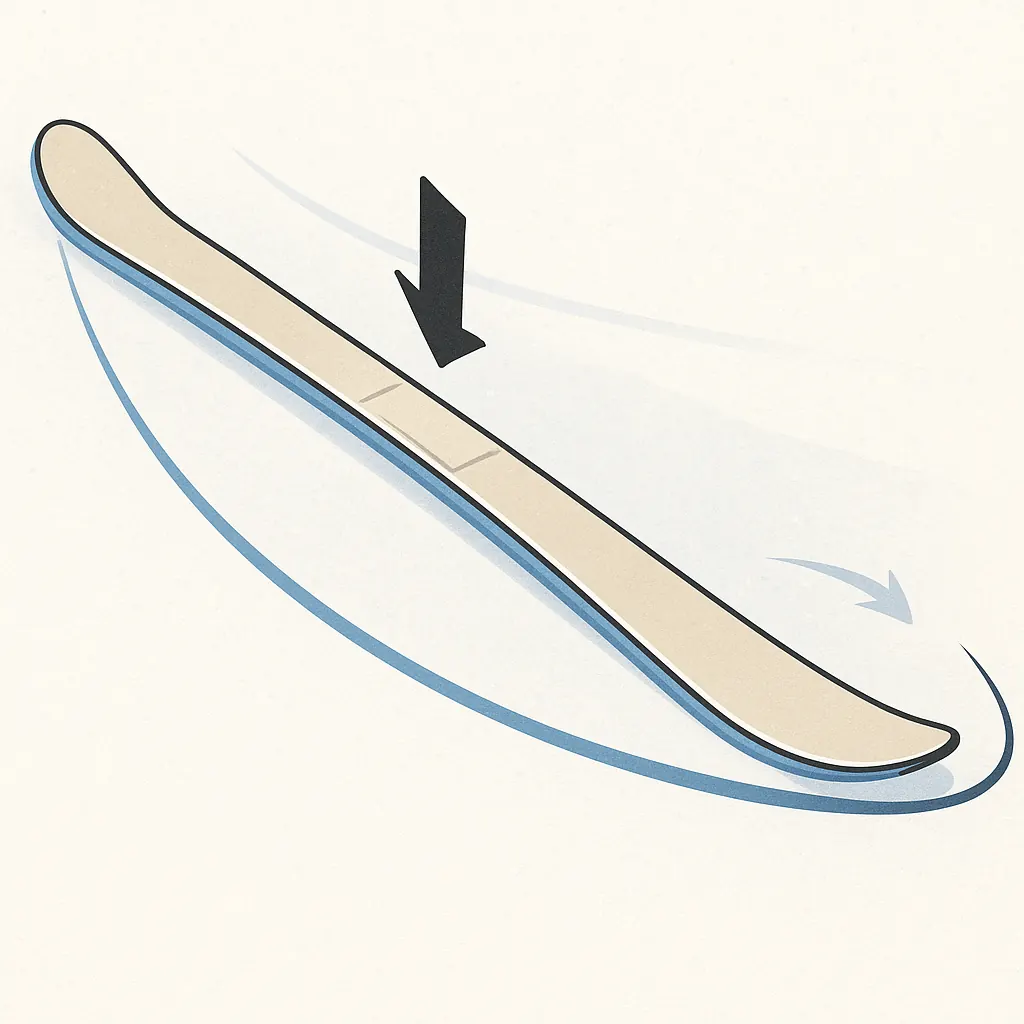
Carving skis feature a deep sidecut. When placed on edge, they naturally trace an arc — making the ski turn instead of the skier forcing it. The technique shifted from sliding to pure edge engagement and pressure control. Every curve became a clean cut through snow.
Impact on culture and competition
- Recreational skiers could master turning much faster and with less effort.
- Racers found new speed and precision through stable edge grip.
- Ski design shifted toward shorter, wider geometries.
- New racing standards appeared — GS and SL adapted to shorter radii.
Fun fact: The original Elan SCX had a 15 m radius — about half of what was standard at the time — and testers thought it was “too extreme” to work. They were wrong.