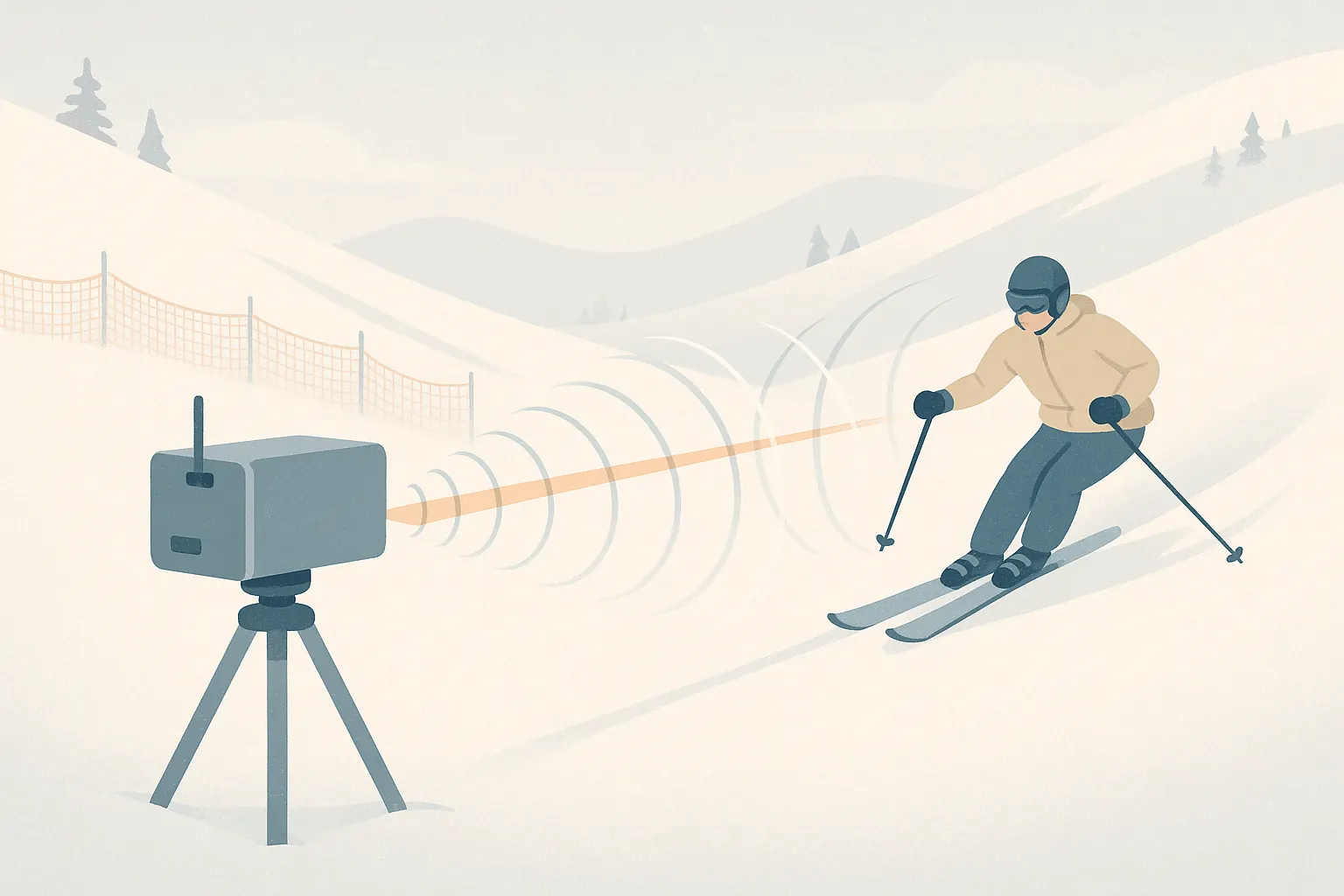
From radar to laser
Early systems relied on Doppler radar, identical in principle to those used by traffic police. The radar beam reflects off the skier, and the frequency shift caused by motion is converted into velocity data.
The rise of LIDAR systems
Modern systems increasingly use LIDAR — laser-based distance measurement that calculates travel time of reflected light. These setups can track not only speed but also the skier’s trajectory and acceleration profile.
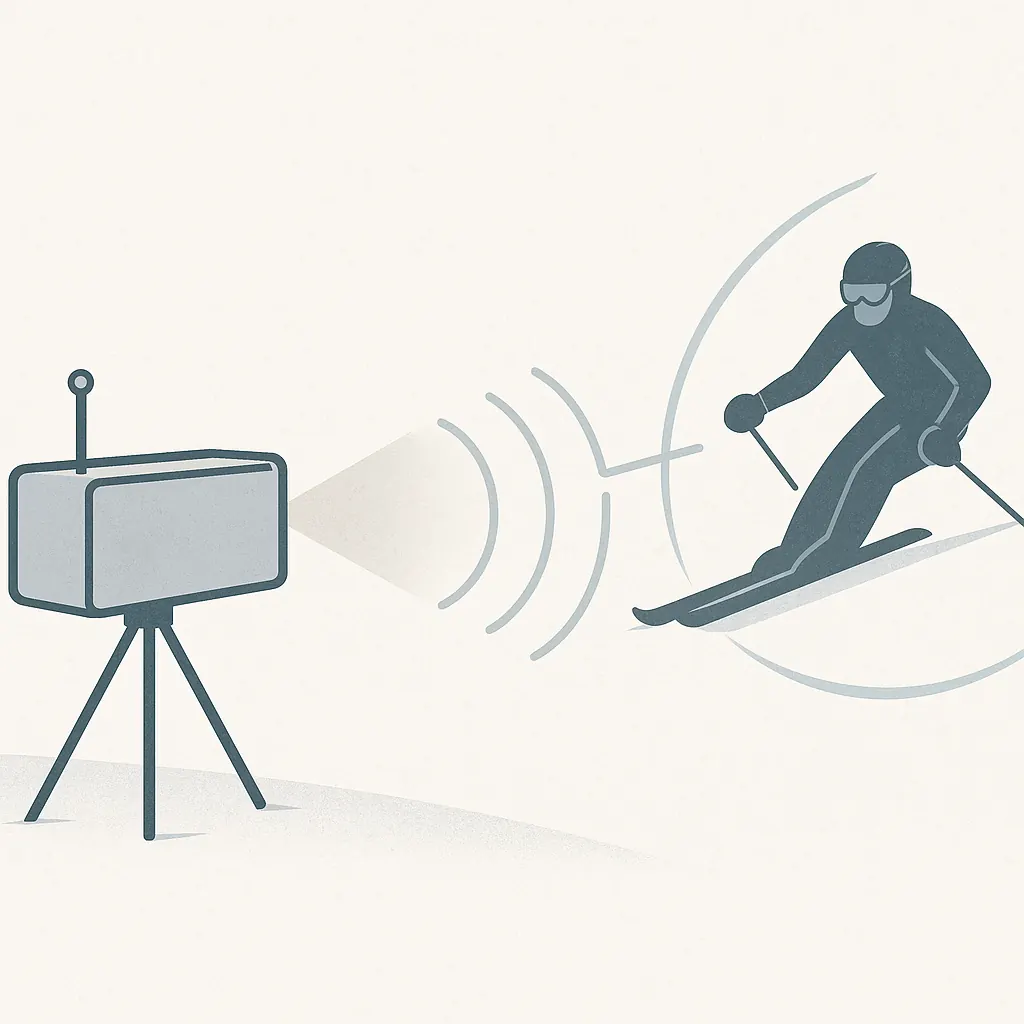
Why angle matters
Speed accuracy depends heavily on alignment. If the radar isn’t directly facing the skier’s trajectory, readings can drop significantly. Professional setups minimize this “cosine error” by careful placement.
Fun fact: The world speed record on skis — 255 km/h — was measured by a Doppler radar during a Speed Skiing event!