Introduction
Bindings must release when they should and hold when they must. If you notice pre-release, non-release, hard step-in or odd noises/play, run the quick checks below and decide whether a professional release test is required.
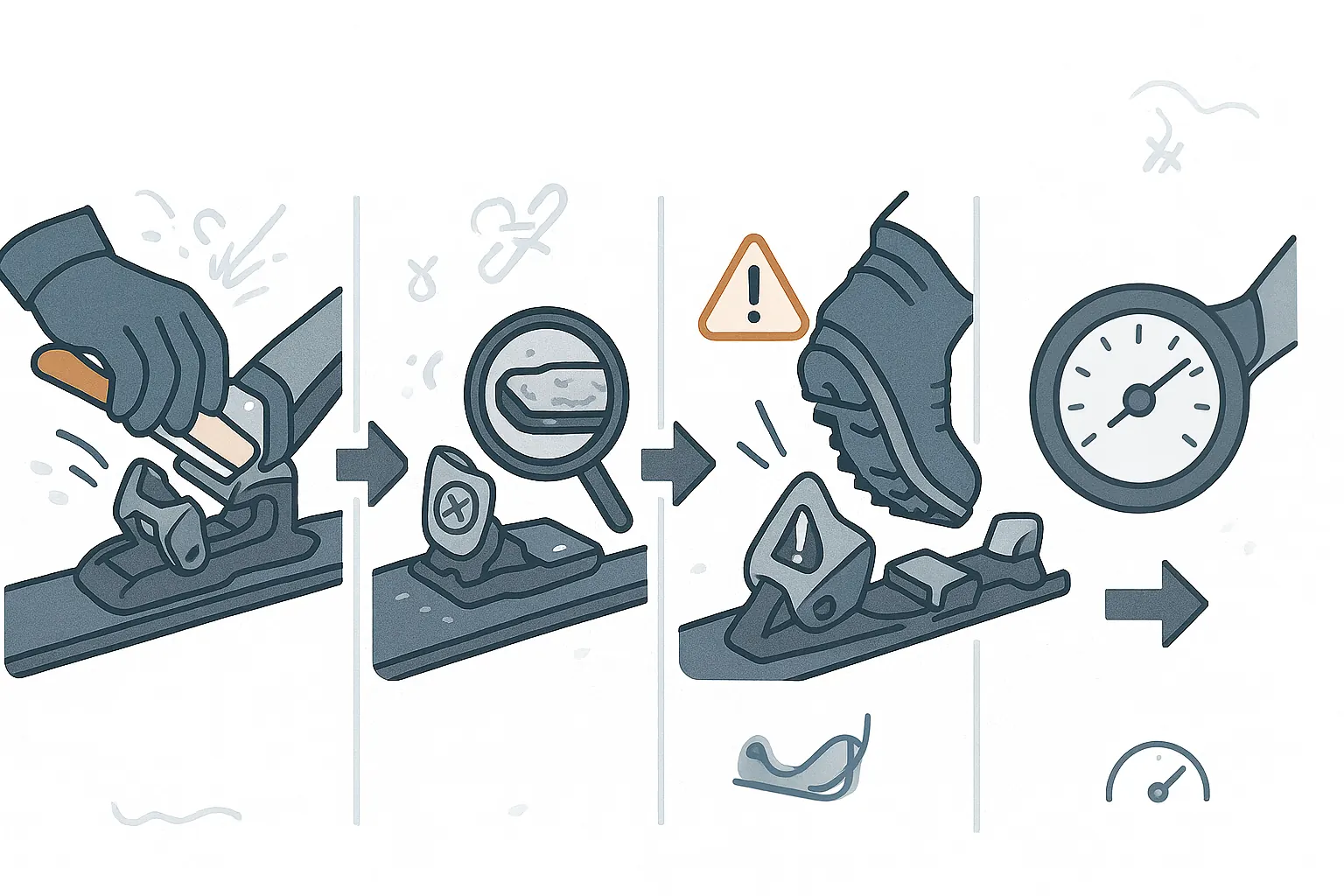
Quick checks – 4 steps
-
Clean contact surfaces
Remove ice/dirt from boot sole, jaws and AFD slider. Do not lubricate the AFD.
-
Inspect the boot
Check sole wear and standard (e.g., ISO 5355/9523). Worn or mismatched soles cause poor step-in/release.
-
Functional feel test
Step in with a clean boot; expect a crisp click. Gentle twisting/side load: excessive play indicates trouble or too-low DIN.
-
When to visit a shop
For non-release or frequent pre-release, stop using the gear and get a professional release test and inspection.
Typical Mistakes
- Skiing with iced soles/jaws – poor step-in and false releases.
- “Fixing” DIN blindly instead of getting a measured release test.
- Using worn/mismatched soles – uneven contact at the AFD.
- Lubricating AFD/jaws – alters friction and release behaviour.
Common Questions
Why do I pre-release in mellow turns?
Likely causes: ice/dirt, too-low DIN or worn soles. Clean, inspect and then get a release test.
The binding didn’t release in a fall—what now?
Stop skiing and have a professional test done; don’t crank DIN up blindly—injury risk increases.
Should I lube the AFD?
No. Keep it clean, dry and undamaged; lubricants change friction and invalidate release behaviour.
Instructor’s Tip
“Before each day: clean boot sole and jaws, step in and listen for a crisp click. Don’t DIY DIN—shop tests keep you safe.”
Conclusion
Quick checks and timely servicing prevent both premature and delayed release. Safe skiing starts with trustworthy bindings.