Introduction
Boot flex determines how easily you can pressure the ski tips and manage edge engagement. Get it right for smoother rhythm and safer knees.
Steps (essence)
-
Choose a baseline flex
Match body mass, strength and skiing style. If hips drop back or knees get pushed behind your feet, the flex is off.
-
Set buckles & power strap
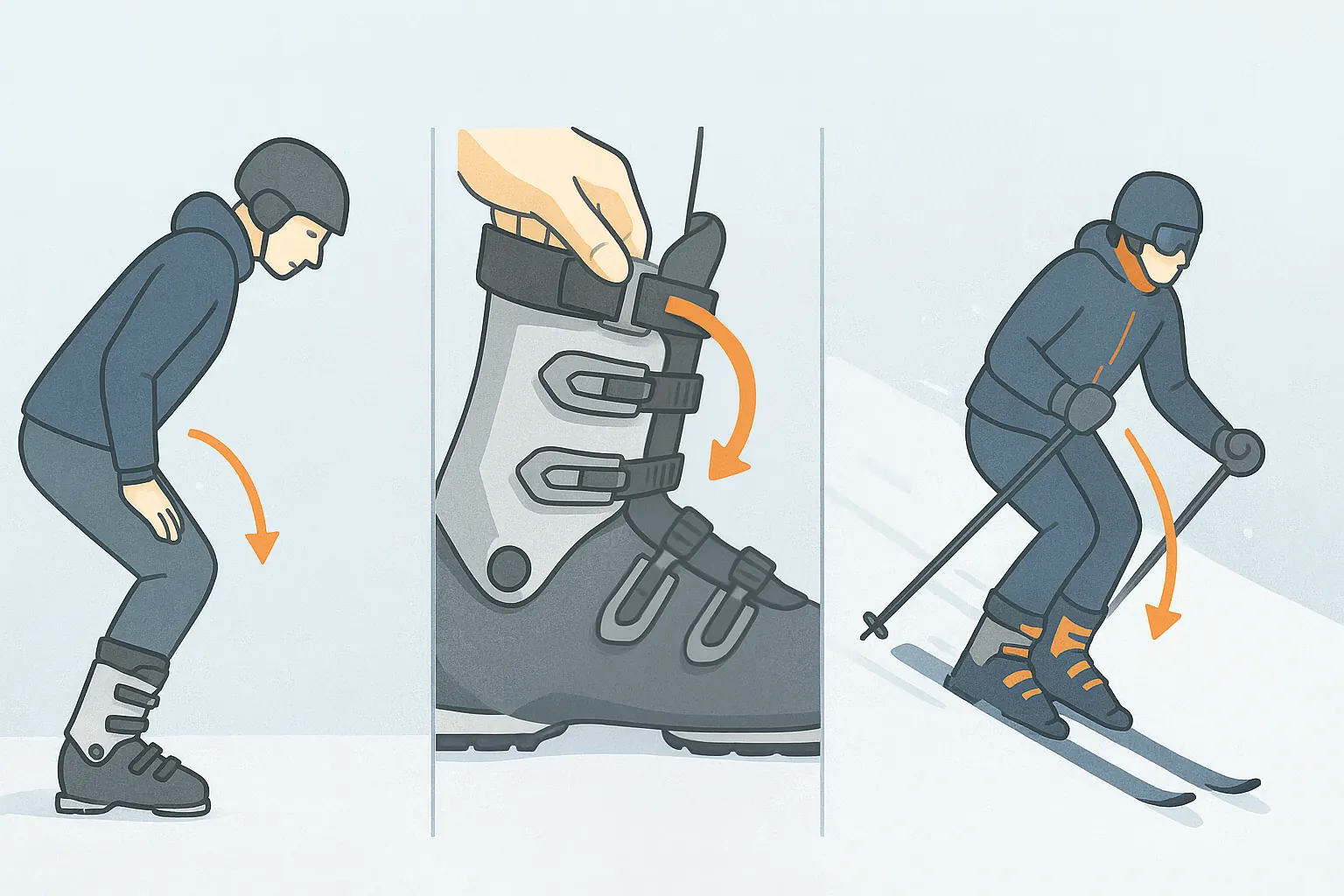
Tighten bottom to top; snug the power strap so the shin rests on the tongue without locking the ankle.
-
Neutral-stance quick check
On flat snow in boots, flex gently into the tongues until you feel elastic resistance and can return smoothly. Too stiff – you can’t flex; too soft – you collapse forward.
-
On-snow trial & fine-tune
Do short turns on a mellow slope. If hips drift back and hands float, ease upper buckles or reduce flex (if adjustable). If you lack support, add tension or go stiffer.
Typical mistakes
- Overly stiff boots push the pelvis back and delay tip pressure.
- Too soft boots cause forward collapse and stress knees.
- Over-tightened power strap locks the ankle and kills rebound.
- Loose lower buckles let the foot slide and reduce precision.
Beginner questions
Do I need to match flex tables exactly?
Use them as a start. Always confirm on snow—can you flex and recenter without losing balance?
Does cold weather change flex?
Yes. Plastics stiffen in the cold, so you may loosen upper buckles/power strap slightly.
Is an adjustable flex mechanism worth it?
It helps if you ski varied terrain and rhythms—use a softer or stiffer setting on the same boots.
Instructor’s tip
“Look for springy resistance in the tongue—support going forward and smooth return without shoving the hips back.”
Conclusion
Dialed-in flex stabilizes stance, speeds re-centering and makes turn transitions clean. A few minutes of setup pay off all day.