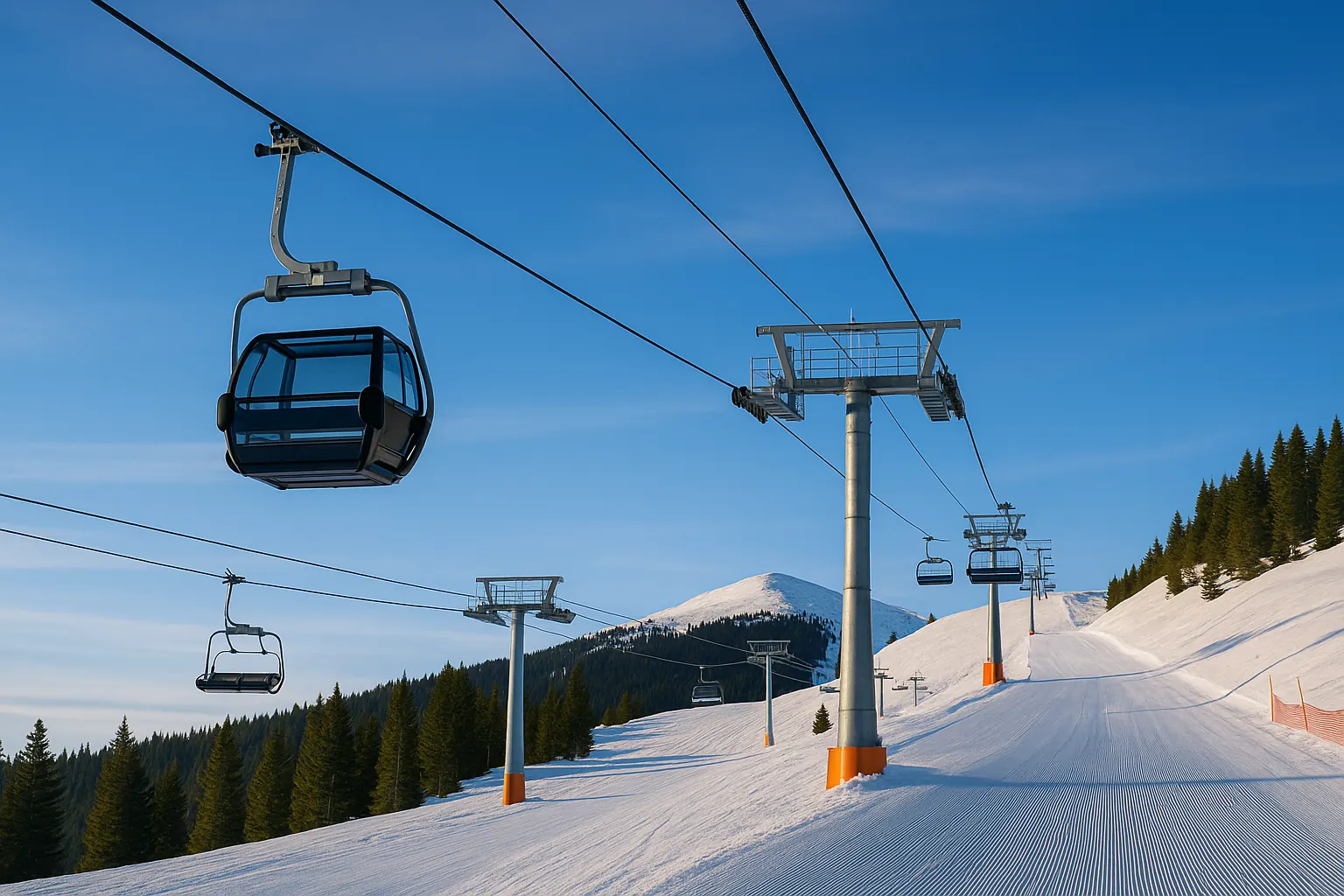
Why lifts are the “invisible heroes”
Without lifts, every run would end with a hike. Lifts set the flow of skiers, reduce queues, and shape your day on snow. Their evolution is a story of practicality, safety, and steadily improving technology.
From early rope tows to modern detachable chairs and gondolas, the goal is the same: comfortable, reliable uphill travel with minimal waiting—backed by robust safety systems for all conditions.
Early workhorses: rope tow, platter and T-bar
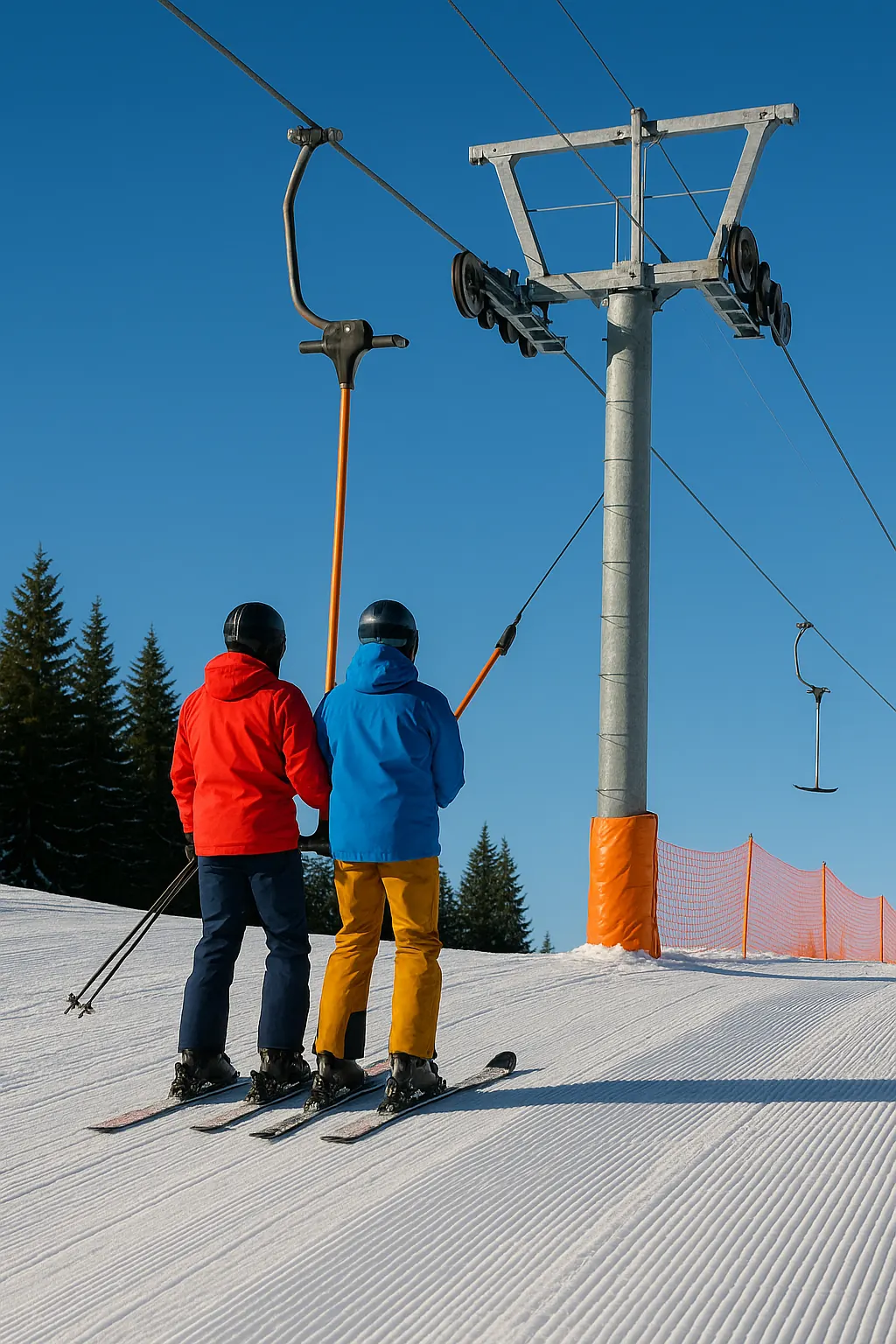
Tows are simple: a drive moves a rope or cable, and skiers “connect” via a platter or T-bar. They’re inexpensive, wind-resistant and great for short links—though loading can challenge beginners and longer rides can be tiring.
Chairs and gondolas: comfort and capacity
Chairlifts carry 2–8 riders seated. On detachable systems, chairs slow in the station for easy loading/unloading while the rope keeps line speed—boosting both comfort and capacity. Gondolas (cabins) fully enclose passengers, shield from wind and snow, and often span big verticals or connect resort zones.
Fun fact: Bubble canopies aren’t just warm—they reduce drag, helping operations remain stable in rough weather.
Under the hood: drive, rope, towers and safety
- Drive & gearbox: an electric motor (with diesel backup) turns the bullwheel; speed and acceleration are precisely controlled.
- Haul rope: multiple steel strands form the rope; stretch and wear are routinely measured and inspected.
- Towers & sheaves: keep the line true; sensors monitor vibration and alignment.
- Grips: fixed or detachable—the latter open in stations so chairs/cabins slow down.
- Brakes & safety: service and emergency brakes, anti-slip detection, anemometers (wind), and evacuation systems.
Capacity depends on vehicle size (seats), spacing, and line speed. A well-designed lift eases bottlenecks, shortens waits and upgrades the whole mountain experience.
Modern lift types
Quick overview of common systems — each type has its ideal use case.
- Surface lift (platter/T-bar): short and/or steep connectors, highly wind-resistant.
- Fixed-grip chairlift: simple and economical for medium-length lines.
- Detachable chairlift: slow boarding/unloading, high line speed, greater comfort and capacity.
- Gondola (cabin cable car): weather protection and very high throughput.
Conclusion
Lifts shape your day as much as the runs do. Each type exists for a reason—from beginner-friendly tows and fast chairs to gondolas that link entire valleys. Next time you ride a chair, you’ll notice how much precision engineering sits behind that “invisible” part of the day.